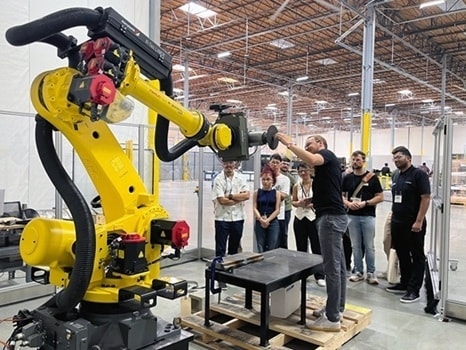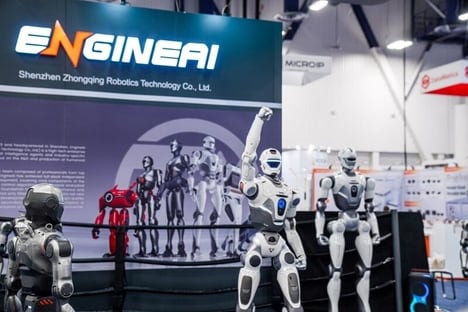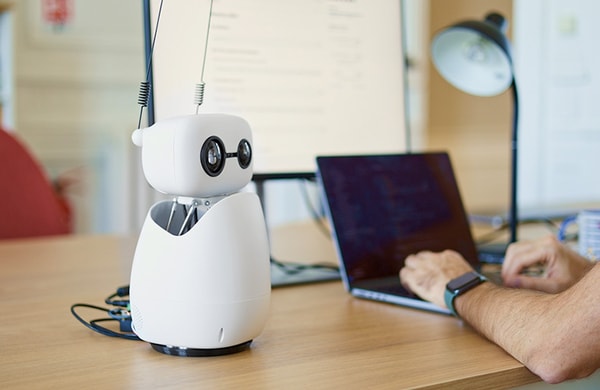

Arm Holdings introduced a new Physical AI unit designed to support artificial intelligence systems that interact with the real world. The unit focuses on technologies that fuse AI with physical motion, featuring support for applications across vehicles, robots, and autonomous machines. This structural shift reflected growing industry interest in embodied AI, where systems must sense, decide, and act within complex environments.
The Physical AI unit sits alongside newly formed Cloud AI and Edge AI divisions, which organize Arm’s work around where AI workloads run. Cloud AI targets high-performance computing in data centers, while Edge AI emphasizes on-device processing in smartphones, wearables, and embedded products. Arm’s energy-efficient architectures and large developer ecosystem position its compute platform as a common layer within physical AI stacks from partners such as Nvidia.
Moreover, aligning hardware and software around physical AI helps manufacturers deliver low-latency performance while maintaining power efficiency, a critical requirement for mobile and autonomous systems.
Image Credit: Shutterstock / Piotr Swat
What's Driving This Trend
- Embodied AI Systems
- The integration of AI into real-world machines paves the way for systems capable of interpreting and interacting with complex environments autonomously.
- AI-driven Robotics
- Advancements in AI technologies are driving the development of robots that blend sophisticated decision-making with physical motion capabilities.
- Energy-efficient AI Platforms
- The shift towards energy-efficient AI architectures is becoming crucial for powering mobile and autonomous systems with minimal latency.
Who This Affects Most
- Automotive Technology
- Automakers are leveraging physical AI to enhance the capabilities of autonomous vehicles, enabling more robust real-time decision-making.
- Robotics Manufacturing
- Robotics manufacturers are integrating AI technologies to build machines that perform complex tasks in dynamic environments.
- Consumer Electronics
- The consumer electronics industry is integrating edge AI to enhance device functionality while optimizing for energy efficiency and performance.