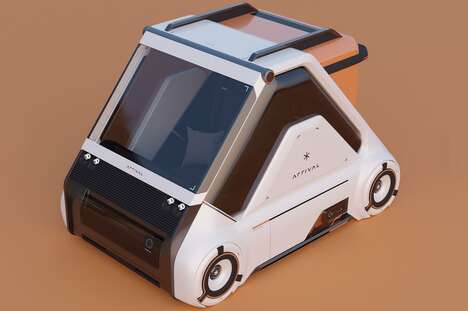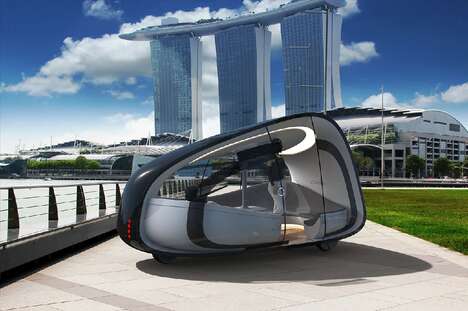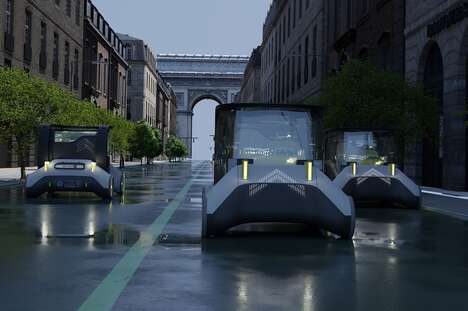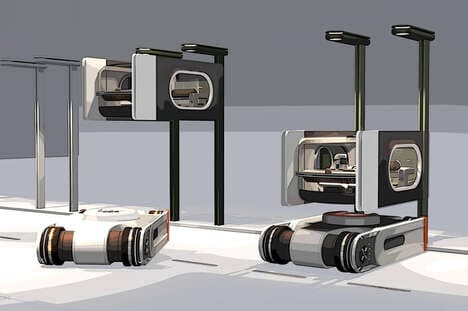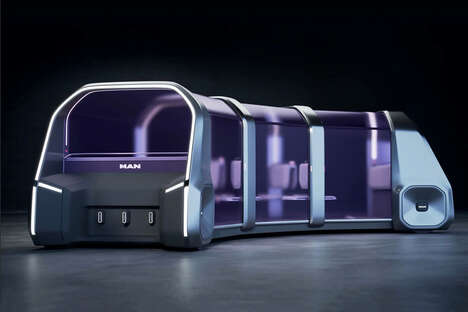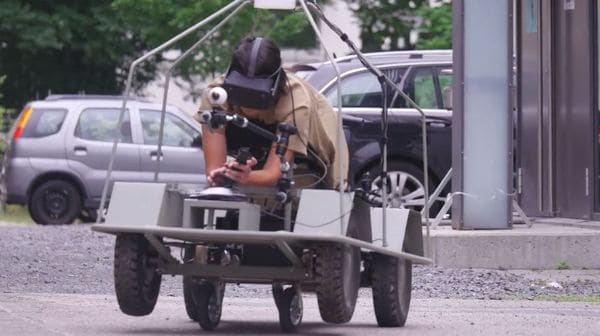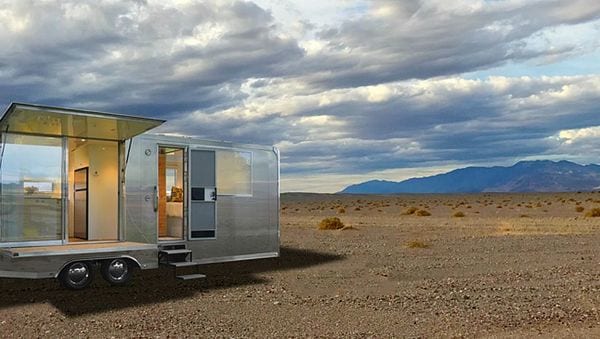
For the Automobility Designer/Developer Challenge 2017 at the LA Auto Show, architecture firm Oiio introduced the 'Oto' concept, which imagines a new method of personal transportation to help individuals get around crowded cities such as Los Angeles.
Oto is a concept that acknowledges the fact that the majority of cabin, engine and trunk space is wasted in conventional cars that are occupied by only a driver. Instead, this single-occupancy vehicle introduces just a transparent cabin to maximize space available on the roads.
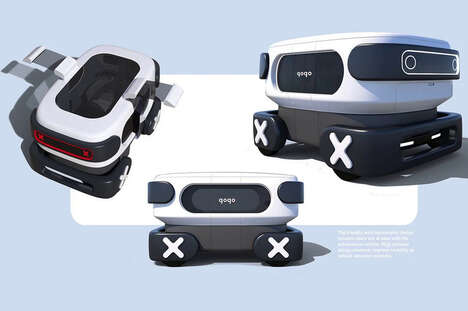
For getting around, Oiio imagines that Oto would operate on a powered wheel base. On the future of transportation, Oiio says: "It is possible that, in the future, LA people would be able to own only the cabin and, through AI centrally controlled circulation, they could create a temporary assembly-unit, an ephemeral design, which would serve their 'exact' needs on demand."
What's Driving This Trend
- Single-occupancy Vehicles
- Maximizing cabin space in vehicles for single passengers presents the opportunity for more affordable, on-demand transportation solutions.
- AI-controlled Transportation
- Centrally controlled circulation and assembly of on-demand vehicles through AI presents the opportunity for more efficient and environmentally-friendly transit systems.
- Transparent Cabins
- The use of transparent cabins in personal transportation vehicles presents the opportunity for more immersive and engaging travel experiences.
Who This Affects Most
- Automotive Industry
- The development and manufacturing of single-occupancy vehicles with transparent cabins and powered wheel bases presents the opportunity for innovative solutions to urban transit and mobility.
- Technology Industry
- The integration of AI technology for centrally controlled, on-demand transportation systems presents the opportunity for disruptive innovations in the field of transportation and logistics.
- Architecture and Design Industry
- The conceptualization and design of urban infrastructure and housing solutions that accommodate AI-controlled, single occupancy vehicles presents the opportunity for major disruptive innovations in transportation and urban planning.