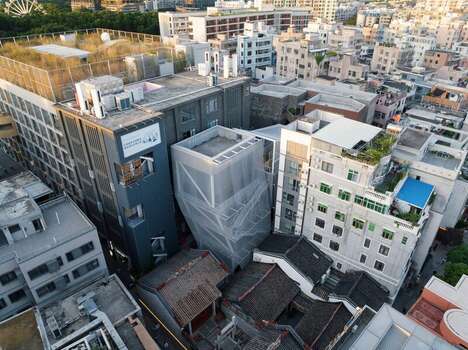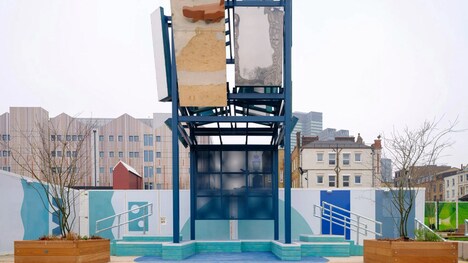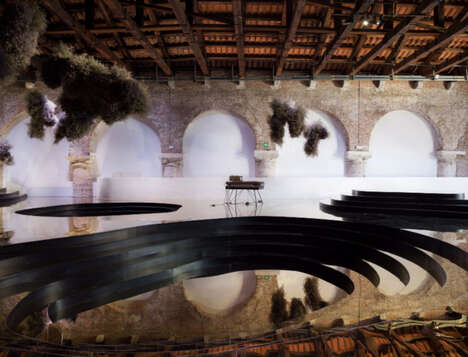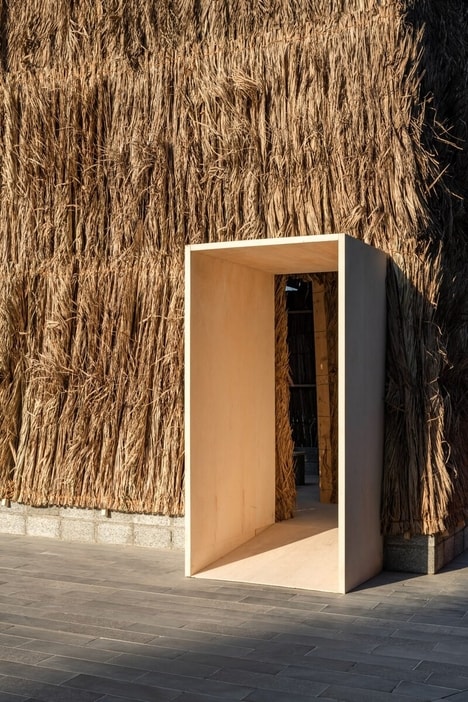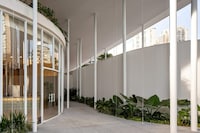
Other Architects and Retallack Thompson play with the concept and use of space with their site-specific pavilion installation at the National Gallery of Victoria in Melbourne. Referred to as an 'anti-pavilion,' the interactive architectural structure uses the space of the institution's famed sculpture garden.
Through intended minimalist expression and repetitious design, the pavilion installation completely reframes the spatial dimensions of the garden. This completely alters the experience of the visitors, making individuals aware of the strong influence of architecture on spatial value.
The well-calculated design of the anti-pavilion installation builds a series of rooms through the garden via "self-supporting steel frames clad in UV yarn mesh" that changes color, opacity and reflectivity of sunlight as the day progresses. The presence of the garden's Botanics really amps up the experience in the anti-pavilion installation.
What Makes This Trend Stand Out
- Minimalist Expression
- Exploring the use of minimalist expression in architectural installations to completely reframe spatial dimensions and alter visitor experiences.
- Interactive Architecture
- Developing interactive architectural structures that engage visitors and create unique spatial experiences.
- Adaptive Design
- Using materials and technology that adapt to changing environmental conditions, such as self-supporting steel frames clad in UV yarn mesh.
Sectors Adopting This
- Art and Design
- Opportunity for artists and designers to reimagine traditional pavilion installations and create immersive experiences.
- Architecture and Construction
- Innovative designs and materials can be used to transform the way buildings interact with their surrounding spaces.
- Tourism and Hospitality
- Implementing interactive architectural structures in tourist attractions to enhance visitor experiences and differentiate offerings.