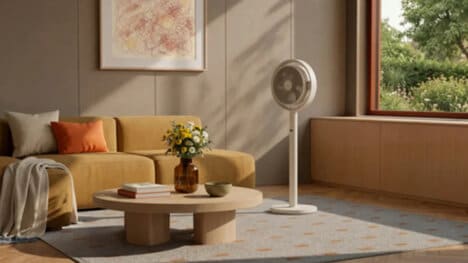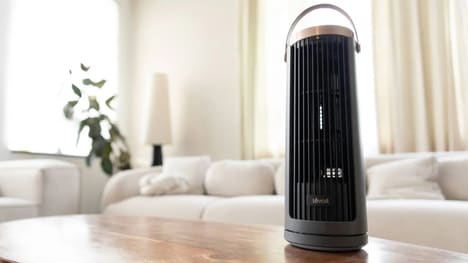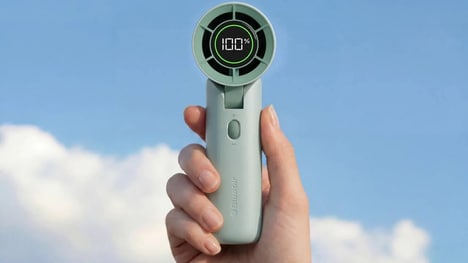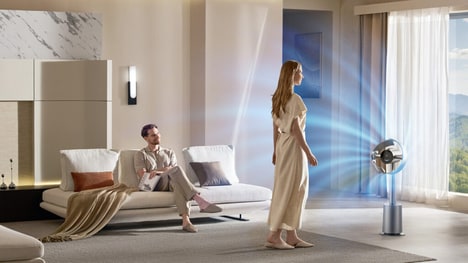
Balmuda's NatureWind Studio Fan uses a patented two-blade airflow system to spread a softer current across a room instead of the direct blast common to conventional fans. Designed and made in Japan, it turns a standard cooling appliance into a quieter option for everyday indoor use. Its design centers on how the breeze lands, not only how much air moves.
At its lowest setting, the fan runs at 9 dB, which suits spaces where background noise matters, and its Jet Mode is built for full-room circulation. It is currently sold out, with black and white versions both unavailable.
The patented two-blade setup shifts home fans toward airflow quality and noise control, not just raw output. The 9 dB floor gives Balmuda a way to compete on comfort and placement in rooms where a louder fan would be more intrusive.
Image Credit: AI-generated
What Makes This Trend Stand Out
- Soft-air Cooling
- Appliances that prioritize gentle, room-filling airflow over concentrated blasts create new differentiation around comfort, wellness, and premium everyday utility.
- Quiet-first Appliances
- Ultra-low-noise operation positions household devices for bedrooms, studios, offices, and shared spaces where acoustic comfort is becoming a purchase driver.
- Nature-inspired Engineering
- Biomimetic airflow design signals potential for consumer products that translate natural sensations into patented performance features and higher perceived value.
Sectors Adopting This
- Home Appliances
- Fan and cooling brands can compete through sensory experience, noise reduction, and airflow precision rather than relying only on power or price.
- Interior Design
- Quiet, aesthetically refined cooling products expand opportunities for climate devices to be integrated into visible living and work environments.
- Consumer Electronics
- Premium hardware makers are increasingly able to elevate simple devices with proprietary engineering, minimalist design, and comfort-led performance claims.