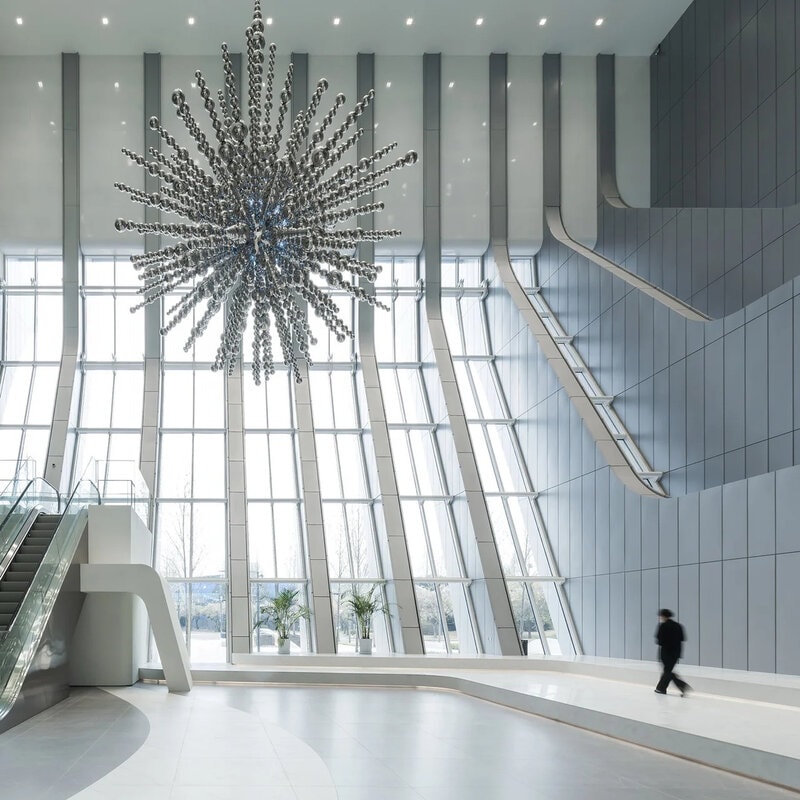
Park1538 Gwangyang is a cultural complex designed by Unsangdong Architects and Posco A&C on the former greenhouse site of POSCO's Gwangyang Steelworks. Rather than distancing itself from the city's industrial identity, the project celebrates it through architecture shaped by steel, light, and movement. Curved steel surfaces reference Gwangyang's name, meaning "sunlight," reflecting changing daylight across the building while softening the material's traditionally heavy appearance. The complex brings together exhibition spaces, an education center, public plazas, and layered circulation routes to reconnect visitors with the city's manufacturing heritage.
The building's defining feature is a system of vertically oriented steel ribs that serve as both structure and facade, supporting long-span interiors while creating a sculptural rhythm across the exterior. Parametric design tools coordinated each rib's curvature, spacing, and structural performance, allowing the expressive form to remain buildable. A cantilevered exhibition hall creates a sheltered public plaza below, while ramps, staircases, and elevated walkways reveal views of the surrounding steelworks, Seomjin River, and Baegunsan Mountain.
Image Credit: Unsangdong Architects, Posco A&C
What Makes This Trend Stand Out
- Industrial Heritage Placemaking
- Former manufacturing sites are becoming cultural anchors that blend history, education, and public space, creating value through adaptive reuse and place-based identity.
- Parametric Steel Architecture
- Advanced design tools are expanding how structural materials can perform aesthetically and technically, opening possibilities for expressive yet buildable civic environments.
- Experiential Manufacturing Tourism
- Visitors are increasingly drawn to immersive destinations that reveal industrial processes and local production stories through curated circulation, exhibitions, and scenic viewpoints.
Sectors Adopting This
- Architecture and Design
- Cultural complexes rooted in industrial materials and digital fabrication methods point to new models for landmark buildings that merge engineering, storytelling, and public engagement.
- Real Estate Development
- Underused industrial land can gain renewed relevance as mixed cultural infrastructure, supporting regeneration strategies without erasing a district’s economic heritage.
- Tourism and Culture
- Heritage-focused attractions connected to active or historic production sites offer differentiated visitor experiences that combine education, architecture, and regional branding.