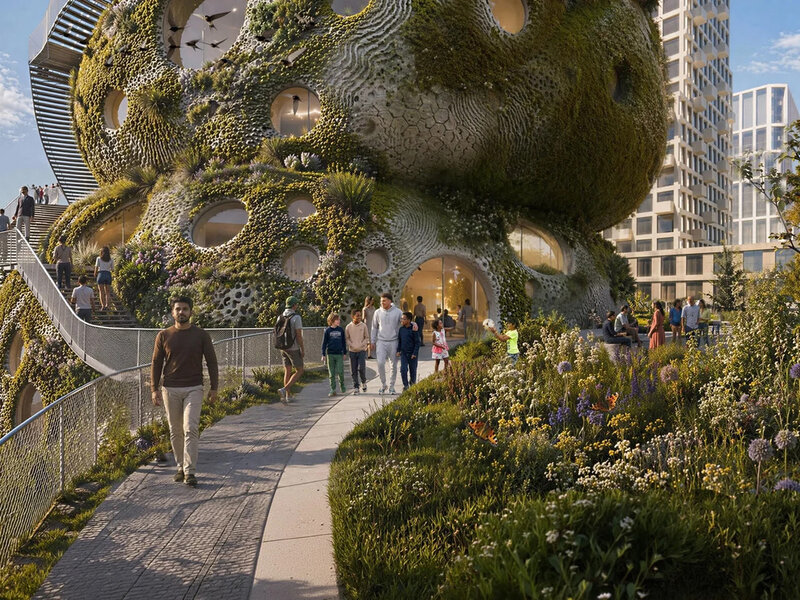
Rotterdam ROCKS! is MVRDV's winning proposal for Shift's international design competition, featuring two towers composed of seven stacked rock-like volumes along the Maas riverbank. Spanning approximately 30,000 square metres, the project organizes exhibition spaces within cave-inspired interiors connected by two circulation routes, while a third exterior path leads visitors through an immersive landscape and to a public observation terrace. The mixed-use program also incorporates a 200-room hotel, conference centre, food court, and event spaces.
The facade integrates pockets for soil, water, vegetation, and nesting habitats to support birds, insects, and other urban wildlife as part of the building envelope. Planned for Rotterdam's Waterkant district, the project will serve as the first Shift Embassy, a permanent institution focused on climate action and biodiversity. Rotterdam ROCKS! won the €240 million competition ahead of proposals from several international architecture studios and is currently targeting completion in 2032.
Image Credit: MVRDV
Why This Trend Is Growing
- Habitat-integrated Architecture
- Building envelopes that embed vegetation, water, soil, and nesting spaces create new potential for real estate assets to function as urban biodiversity infrastructure.
- Experiential Climate Institutions
- Climate-focused destinations combining exhibitions, hospitality, events, and public landscapes point to emerging models for civic engagement and sustainable tourism.
- Landform-inspired Towers
- Rock-like stacked forms and cave-inspired interiors signal opportunities for iconic architecture that merges landmark design with immersive environmental storytelling.
Industries Being Reshaped
- Architecture and Design
- Biophilic facades and habitat-driven structures expand the role of design firms from aesthetic placemaking into ecological performance and climate education.
- Hospitality and Tourism
- Hotels embedded within cultural and environmental landmarks offer differentiated guest experiences anchored in sustainability, public access, and destination identity.
- Urban Development
- Mixed-use waterfront projects that combine biodiversity, cultural programming, and public observation spaces reshape how districts attract investment and community activity.