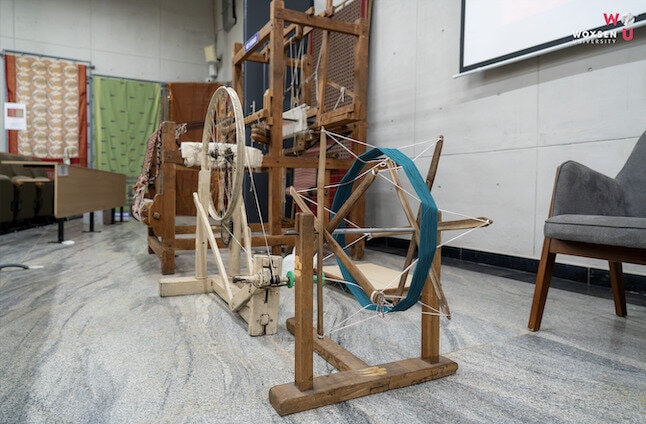
Woxsen University, through its School of Arts and Design, commemorated National Handloom Day by hosting a hands-on workshop in association with the Weaver Service Centre in Hyderabad. This event replaced traditional lecture-based instruction with live loom demonstrations and direct engagement with master weavers.
The National Handloom Day celebration featured an exhibition curated by the Centre's director, which showcased a range of handloom textiles from various regions of India, traditional weaving techniques, and information on government support schemes. Students were invited to examine the exhibits up close and converse with weaving experts. An interactive session further explored the preservation of handloom heritage, the support of artisan communities, and the potential for indigenous textiles to inspire contemporary design innovation.
Through this initiative, the university aims to bridge the gap between academic design education and real-world craft traditions.
Image Credit: Woxsen University
Why This Trend Is Growing
- Experiential Craft Education
- Hands-on learning models bring students into direct contact with master artisans, creating space for design programs to develop more immersive, skill-based curricula rooted in cultural practice.
- Heritage-inspired Design
- Traditional handloom techniques offer contemporary designers a rich foundation for distinctive materials, patterns, and product concepts that differentiate modern collections.
- Artisan-academia Collaboration
- Partnerships between universities and craft institutions connect formal education with lived expertise, opening pathways for new research, preservation, and market-relevant textile innovation.
Industries Being Reshaped
- Higher Education
- Design schools can become hubs for applied cultural learning by integrating live demonstrations, artisan mentorship, and community-based workshops into academic programs.
- Textile Design
- Indigenous weaving traditions provide textile brands with opportunities to reinterpret regional craft methods for premium, sustainable, and culturally resonant products.
- Cultural Preservation
- Interactive exhibitions and educational collaborations strengthen public engagement with craft heritage while supporting new visibility for artisan communities and traditional techniques.