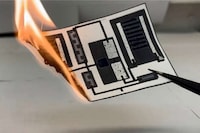
Batteries and supercapacitors made from paper and a special carbon nanotube ink may be able to provide cheap and easy power storage solutions, according to Stanford researchers. Paper and ink batteries are created by heating the paired materials. The nano-ink sticks to the fibrous paper to create an extremely durable supercapacitor that may be able to last through 40,000 charge-discharge cycles—far more than a lithium battery.
Previous research has been done using plastics, but paper provides a better foundation because the nano-ink makes a stronger bond with paper. Even when crumbled, the paper batteries continue to work.
Key Themes Behind This Trend
- Paper and Ink Batteries
- Opportunity for disruptive innovation in battery technology by using carbon nanotube ink and paper as a cheap and durable power storage solution.
- Supercapacitors with Carbon Nanotube Tech
- Incorporating carbon nanotube technology in supercapacitors offers the potential for longer-lasting and more efficient power storage.
- Cheap and Easy Power Storage Solutions
- Developing low-cost and user-friendly power storage solutions using paper and ink batteries can disrupt the energy storage industry.
Where This Applies
- Energy Storage
- The energy storage industry can explore the use of paper and ink batteries for cost-effective and durable power storage applications.
- Battery Technology
- Battery technology industry can investigate the use of carbon nanotube ink and paper for creating innovative and long-lasting battery solutions.
- Electronics Manufacturing
- Electronics manufacturing industry has the opportunity to incorporate paper and ink batteries in their products for enhanced power storage capabilities.