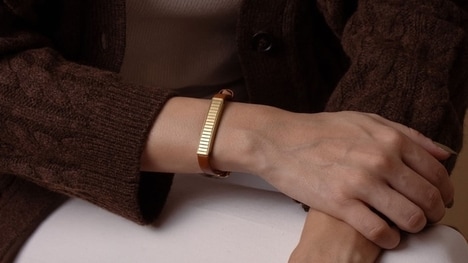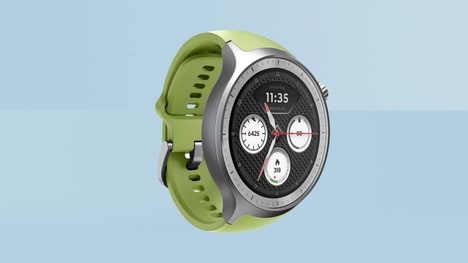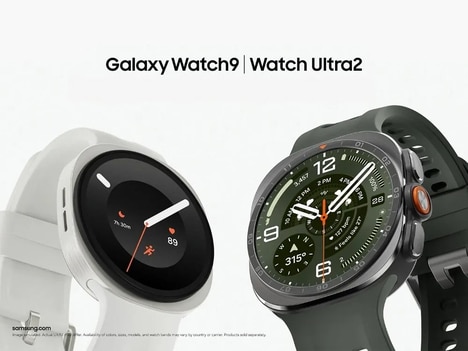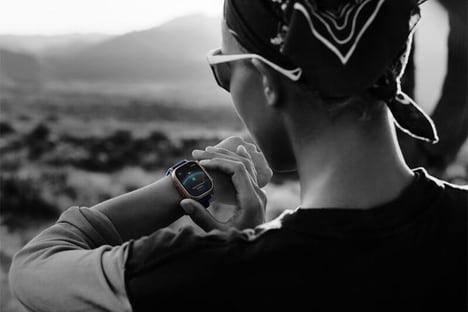
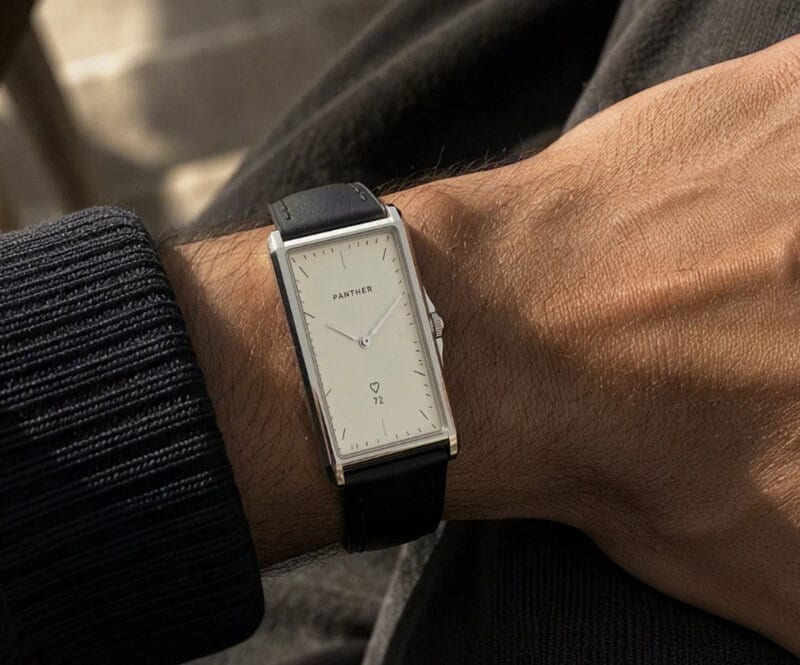
One major reason people resist buying a health-tracking watch is style, as many would rather sport something with the classic look of a traditional timepiece than a sleek, obviously tech-forward wearable, and in that case, the Panther Solstice is for them. This launch from Panther Technology delivers modern health-tracking features in a slim form inspired by classic 1930s dress watches. Available in two case sizes and natural steel or gold, the watch accommodates personal style preferences with interchangeable leather, rubber, and woven fabric bands.
While the Solstice's display is digital, proprietary 3D technology keeps the watch face looking like a traditional mechanical style. Solstice monitors sleep stages, resting heart rate, HRV, stress, wrist temperature, recovery, and more, and offers automatic workout detection for activities like running, walking, and swimming—the watch is water-resistant to 5 ATM.
Why This Trend Is Growing
- Disguised Health Wearables
- Luxury watches with concealed biometric features create room for wellness technology that blends into formal wardrobes without compromising everyday tracking.
- Analog-looking Digital Displays
- Mechanical-style interfaces powered by advanced screen technology point to new premium device experiences that reduce the visual friction of connected hardware.
- Modular Style Wearables
- Interchangeable bands, finishes, and case sizes reflect growing demand for personalized health devices that adapt across fashion contexts and user identities.
Industries Being Reshaped
- Wearable Technology
- Hybrid smartwatches expand the category by pairing continuous health sensing with designs appealing to consumers who reject overtly tech-centric accessories.
- Luxury Watches
- Traditional watch aesthetics enhanced with digital wellness capabilities suggest new competitive territory between heritage timepieces and connected personal devices.
- Digital Health
- Passive monitoring for sleep, stress, recovery, and temperature introduces opportunities for health platforms that collect data through more socially acceptable lifestyle products.