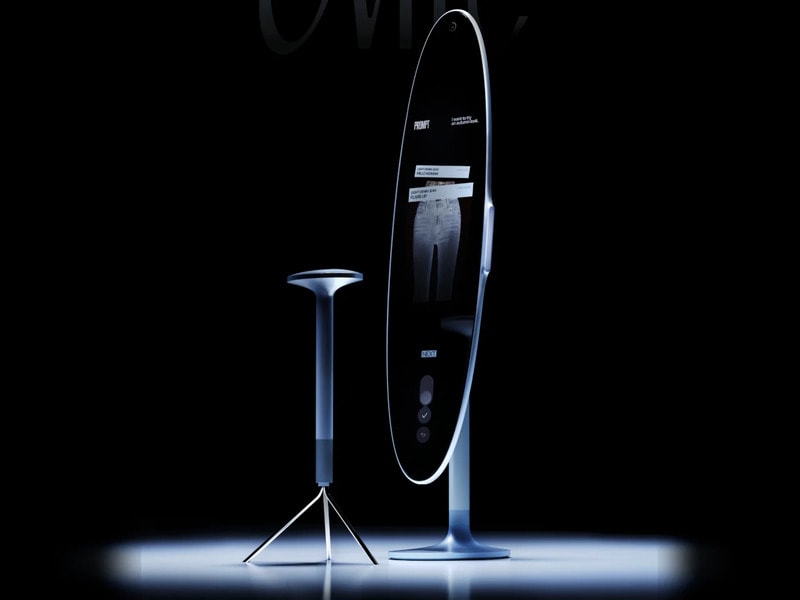
The OVME smart mirror system is a reflective fitting technology that overlays virtual clothing onto a user’s live image to support real-time outfit exploration in retail and dressing environments. Using integrated cameras and depth sensing, the system captures a person’s body dimensions and movements, then maps virtual garments onto the live reflection with accurate positioning and scale. The interface allows users to browse, select, and switch digital fashion items, experiencing how colours, patterns, and silhouettes interact with their posture and proportions without physically changing clothes.
The system also incorporates haptic feedback peripherals that aim to simulate texture and fit sensations, enhancing the sense of “feeling” fabrics in combination with visual virtual try-ons. Data from the depth sensors feeds into fit algorithms that adjust virtual garments to reflect body contours and movement, providing a dynamic response as users move or pose. OVME is designed for use in retail showrooms or dedicated fitting stations, positioning augmented mirrors as a bridge between physical presence and digital wardrobe experiences.
Image Credit: Ovme
What Makes This Trend Stand Out
- Haptic Feedback Integration
- Haptic feedback in virtual fitting mirrors presents a novel way to simulate fabric texture, redefining sensory experiences in digital fashion try-ons.
- Real-time Virtual Outfitting
- Real-time clothing overlays enable consumers to explore endless outfit configurations, greatly enhancing personal styling sessions.
- AI-enhanced Body Mapping
- AI-driven body dimension mapping refines garment fitting processes by ensuring garments dynamically adjust to individual movements and postures.
Sectors Adopting This
- Fashion Retail Technology
- Fashion retailers can leverage advanced virtual fitting systems to transform the shopping experience, combining physical interaction with digital convenience.
- Augmented Reality Devices
- The emergence of augmented reality mirrors presents new opportunities for developers of immersive tech environments, blending the digital and physical.
- Consumer Electronics
- Smart mirror systems push the boundaries of personal technology in consumer electronics, incorporating engaging multi-sensory interactions for users.