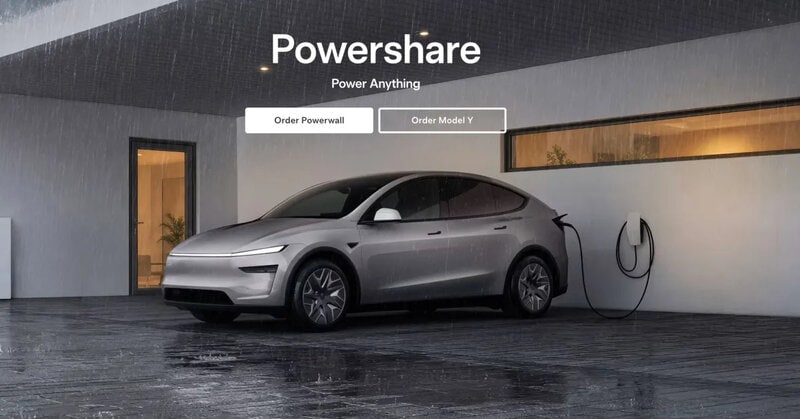
Tesla is bringing Powershare Home Backup to the Model 3 and Model Y, letting owners keep a house running through an outage for over 2 days from a near-full battery. It moves a capability once limited to the Cybertruck onto Tesla's two volume models.
The feature is tied to Powerwall 3, so it suits homes already using Tesla's battery rather than acting as a stand-alone backup box. With up to 11.52 kW of continuous output, it is meant to carry real household loads in a blackout.
In daily use, the car can sit in the garage like stored reserve power, stepping in when the grid drops without changing its role as everyday transport. Tesla guarantees it on qualifying Model 3 and Model Y vehicles in the US and Puerto Rico. The covered orders start on October 1, 2026.
Image Credit: Electrek, Tesla
Key Themes Behind This Trend
- Vehicle-to-home Power
- Bidirectional EV charging expands the role of cars into residential energy assets, creating new value around outage resilience and household load management.
- Integrated Energy Ecosystems
- Tighter links between vehicles, home batteries, and energy software signal opportunities for bundled platforms that make backup power seamless for consumers.
- Resilience-focused Mobility
- Electric vehicles with blackout support redefine mobility ownership by adding emergency preparedness benefits beyond transportation.
Where This Applies
- Electric Vehicles
- Automakers can differentiate mass-market EVs through energy-sharing features that turn parked vehicles into practical home backup systems.
- Home Energy Storage
- Battery storage providers gain new relevance as EV integration increases the capacity and flexibility of residential power networks.
- Smart Home Technology
- Connected home platforms are positioned to manage vehicle batteries, stationary storage, and household loads during outages with greater automation.