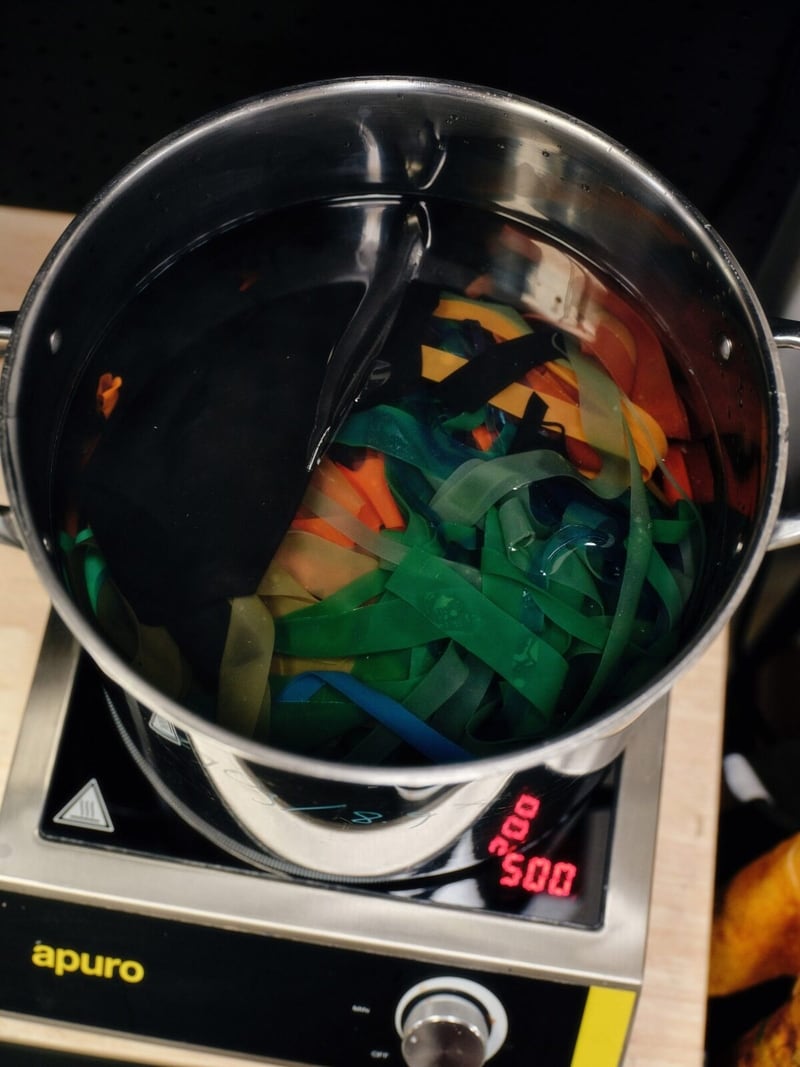
Other Matter Leather is a new upholstery material developed by design studio Other Matter using recycled OM Signage Film, the algae-based bioplastic signage material the studio introduced as an alternative to PVC vinyl and polyester films. Created by designer Jessie French, the material establishes a closed-loop system in which used signage is collected, processed, and transformed into a new sheet material intended for furniture applications. The resulting surface has a soft, flexible character with a natural grain created during production, offering an appearance and texture similar to leather while remaining free from petrochemicals.
Produced in Other Matter’s Melbourne studio, the material is made by reprocessing returned signage film and combining it with charcoal to create a uniform dark finish and distinctive texture. The first application of the material appears on a seating collection by Made by Morgen, which was previously upholstered in leather.
Image Credit: Other Matter
What's Driving This Trend
- Closed-loop Upholstery
- Reclaimed display materials entering furniture production signal a shift toward circular supply chains with lower waste and differentiated surface finishes.
- Algae-based Biomaterials
- Bioplastic films derived from algae point to scalable material platforms that can replace PVC, polyester, and other petrochemical inputs across design applications.
- Leather-like Recycled Surfaces
- Soft, flexible sheet materials made from post-use content create premium alternatives to animal leather while supporting sustainability-led product storytelling.
Who This Affects Most
- Furniture Manufacturing
- Seating and upholstery producers gain access to recycled, leather-like materials that blend tactile performance with circular material sourcing.
- Commercial Interiors
- Workplace, hospitality, and retail spaces benefit from durable biobased finishes that align aesthetic specifications with lower-impact procurement goals.
- Signage and Graphics
- Event and retail signage systems become part of a secondary materials market when temporary films are designed for recovery and remanufacturing.