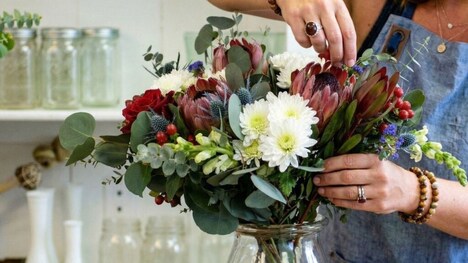
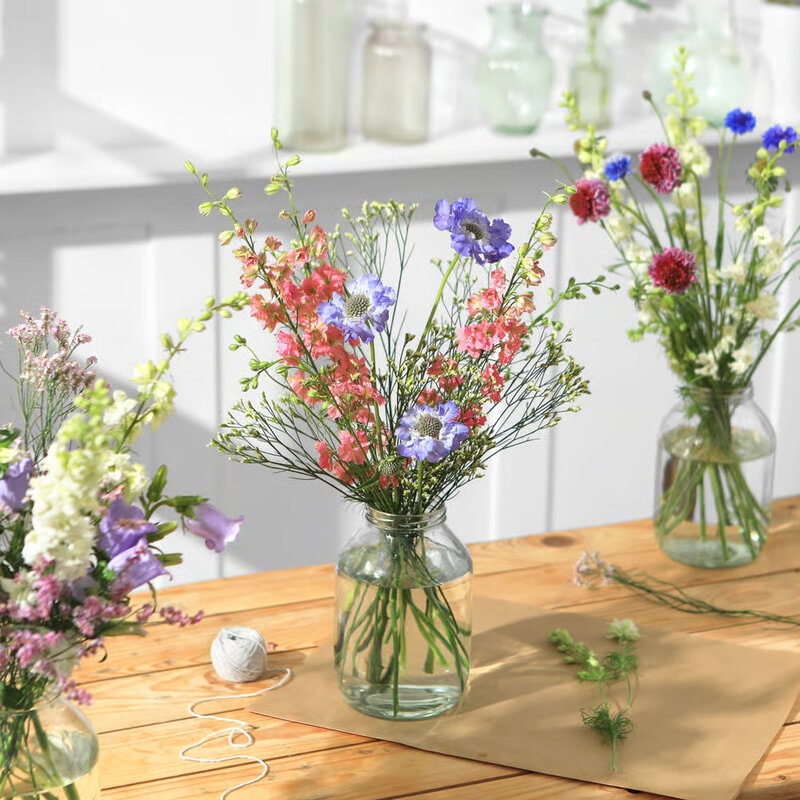
Bloom & Wild relaunched its 100% Organic Blooms bouquet, available from July 20 to September 6, featuring British-grown seasonal flowers from Pool Hullock Farm in Herefordshire. Certified organic by the Soil Association, each bouquet is unique and reflects the varieties naturally thriving in the fields each week.
The arrangements may include cosmos, cornflowers, nigella, oxeye daisies, larkspur and zinnias, all grown without pesticides, synthetic chemicals, heated greenhouses or air miles. Bloom & Wild also uses recyclable or compostable packaging as part of its wider B Corp commitments. Each bouquet sold generates a £1 donation to Rewilding Britain to support habitat restoration and biodiversity projects.
For customers, Organic Blooms offers a seasonal, lower-impact alternative to imported flowers while supporting British growers and nature recovery. The relaunch reflects growing demand for provenance-led floral products shaped by organic farming, biodiversity and more sustainable sourcing.
Image Credit: Bloom & Wild
Why This Trend Is Growing
- Seasonal Provenance Bouquets
- Local flower sourcing tied to weekly field conditions creates room for more transparent, scarcity-driven floral retail models with stronger emotional and environmental value.
- Organic Floral Gifting
- Pesticide-free and certified organic bouquets signal a shift toward premium gifting products that combine aesthetics with verifiable sustainability credentials.
- Biodiversity-linked Purchases
- Donations attached to each bouquet connect consumer spending with habitat restoration, opening space for nature-positive commerce across everyday lifestyle categories.
Industries Being Reshaped
- Floral Retail
- Seasonal British-grown arrangements challenge standardized imported bouquets by making uniqueness, provenance and lower-impact logistics central to the customer experience.
- Sustainable Packaging
- Compostable and recyclable bouquet materials reflect rising demand for packaging systems that support premium presentation while reducing waste.
- Regenerative Agriculture
- Organic flower farming without synthetic inputs or heated greenhouses highlights commercial potential for regenerative practices beyond food and into decorative crops.