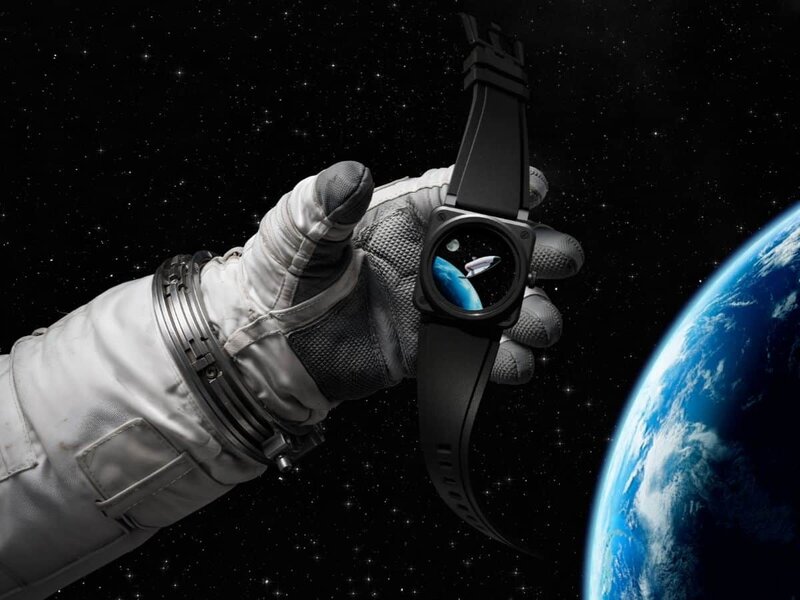
Bell & Ross gives the 'BR-03 Space Mission' a miniature 'Vortex' craft that circles the dial as the minute hand, while the Moon marks the hours. It updates last year's 'BR-03 Astro' by making the spacecraft the primary time display.
A transparent disc carries Earth and the Moon and completes one turn every 12 hours, keeping the hour display clear. A starry aventurine dial sets the backdrop. The watch pairs a 41mm ceramic case with an automatic movement and a 54-hour power reserve. Deliveries begin in mid-November, and the run is capped at 999 pieces worldwide.
At AUD $7,800 in Australia, the piece targets collectors who value dial theater as much as traditional timekeeping. Limiting it to 999 pieces turns that moving spacecraft into a scarcity play within mechanical watches.
Image Credit: Man of Many
What's Driving This Trend
- Orbital Time Displays
- Mechanical watches with planetary or spacecraft indicators create differentiated storytelling surfaces where motion becomes both function and collectible spectacle.
- Narrative Dial Theater
- Luxury timepieces are increasingly using animated dials and themed mechanics to transform routine timekeeping into immersive product experiences.
- Scarcity-driven Collectibles
- Limited production runs heighten desirability by blending mechanical novelty with exclusivity that appeals to collectors seeking distinctive ownership signals.
Who This Affects Most
- Luxury Watches
- High-end watchmakers can differentiate beyond movement specs through expressive complications that merge horology, art, and cinematic visual design.
- Collector Goods
- Premium collectibles benefit from tightly controlled editions and narrative-rich details that convert aesthetic novelty into perceived long-term value.
- Space-inspired Design
- Consumer products using orbital motifs, celestial materials, and spacecraft references tap into aspirational science fiction cues for premium positioning.