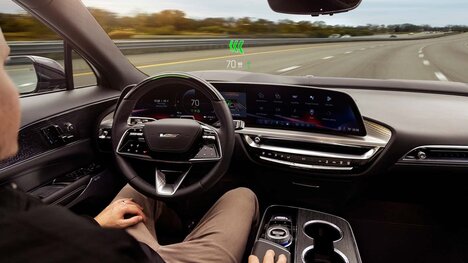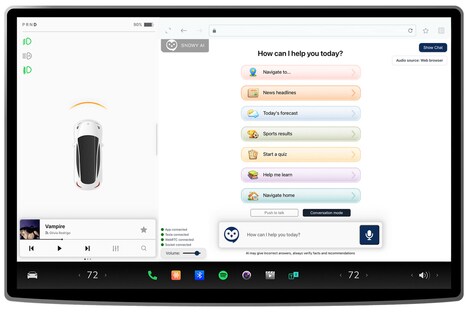

On-device automotive AI is advancing as Mercedes-Benz partners with Liquid AI to develop more responsive voice assistance for vehicles in North America. The collaboration focuses on processing speech, language, and reasoning directly within vehicles, allowing drivers to interact with onboard systems without relying on continuous cloud connectivity.
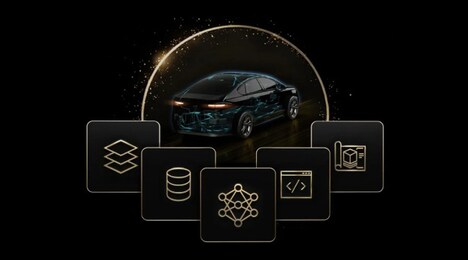
Liquid Foundation Models are designed to operate efficiently on existing vehicle hardware, supporting faster responses and greater privacy. The technology will enhance the MBUX Virtual Assistant across third- and fourth-generation systems, improving conversational understanding and vehicle controls. Built around Mercedes-Benz's MB.OS architecture, the partnership targets its first production deployment in the second half of 2026.
For Mercedes-Benz, the collaboration could strengthen customer experiences through more reliable, personalized vehicle interactions. Liquid AI also gains an opportunity to expand its embedded AI technology into automotive applications, supporting broader development of intelligent vehicle software.
Image Credit: Mercedes-Benz
Why This Trend Is Growing
- Edge-based Vehicle Intelligence
- Localized AI processing inside cars creates room for faster, more private driver interactions that remain dependable when network connectivity is limited.
- Cloud-independent Voice Assistants
- Automotive assistants that interpret speech and manage controls without continuous cloud access signal a shift toward resilient, always-available in-cabin experiences.
- Embedded Foundation Models
- Efficient foundation models running on existing vehicle hardware open possibilities for scalable personalization and advanced reasoning across connected mobility platforms.
Industries Being Reshaped
- Automotive Technology
- Vehicle manufacturers can differentiate software-defined cars through integrated AI systems that improve control, personalization, and user experience without added connectivity dependence.
- Artificial Intelligence
- AI developers are finding new commercial pathways in compact models optimized for edge deployment across regulated, latency-sensitive environments.
- In-car Infotainment
- Cabin interface providers are positioned to evolve voice, navigation, and control systems into more conversational platforms that enhance driver convenience and privacy.