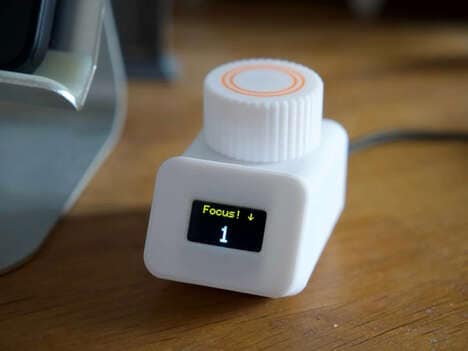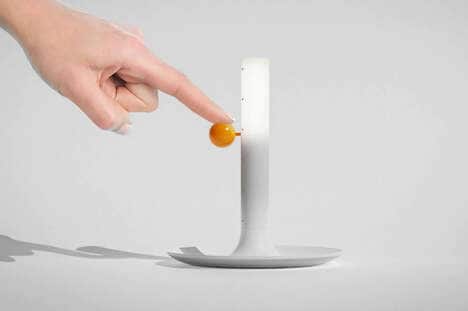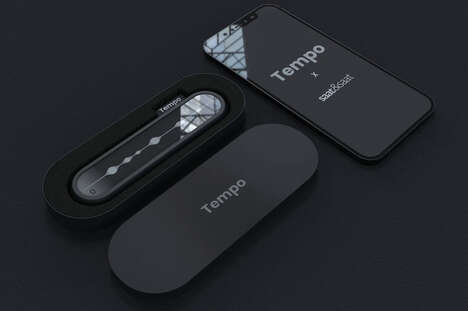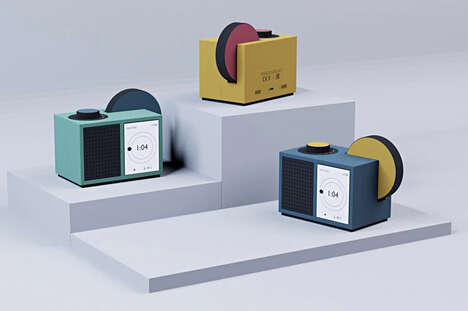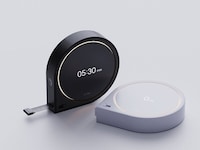
Using a conventional timer or smartphone when cooking often means getting it dirty with hands covered in ingredients, so the conceptual 'No-Touch Timer' has been created to help offer a handsfree alternative.
The timer works by being mounted on a wall or positioned on a counter to keep it within reach; the device interprets hand gestures in order to start a timer thanks to infrared sensors. The further the hand is from the unit will translate to different time periods, which puts a focus on an intuitive experience for chefs and bakers alike to appreciate.
The conceptual 'No-Touch Timer' is the design work of Fu Yibo and Wen Ruoyum and is finished with a dot matrix display to enhance the futuristic aesthetic of the unit.
Why This Trend Is Growing
- Gesture-interpreting Timers
- Developing advanced timers that can be controlled hands-free through gestures can revolutionize the cooking experience and enhance food safety.
- Infrared Sensors for Cooking Gadgets
- Integrating infrared sensors in cooking gadgets can add efficiency, convenience, and hygiene to food preparation, which can create revolutionary products and services.
- Dot Matrix Displays in Kitchen Gadgets
- Incorporating dot matrix displays in kitchen gadgets can improve the user experience by providing clear and detailed information in a futuristic and attractive way.
Industries Being Reshaped
- Kitchen Gadgets
- Developing gesture-interpreting timers and other cooking gadgets with advanced sensing and display technologies can disrupt the kitchen gadgets market and offer innovative solutions for home cooks and professional chefs.
- Smart Home Appliances
- Integrating gesture-recognition and infrared sensing technologies in smart home appliances can provide householders with a more intuitive and hygienic control and automation experience and enable the creation of new use cases and services.
- Restaurant Equipment
- Adopting No-Touch Timer and other innovative sensing and display technologies in restaurant equipment can improve kitchen staff efficiency and food safety and drive operational cost and energy savings.