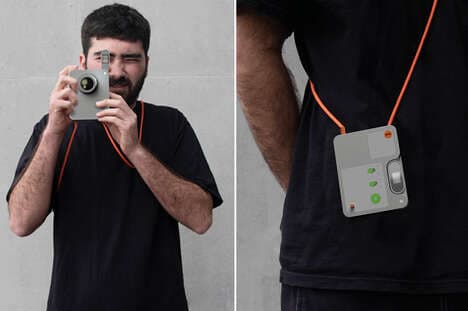


The photos taken by the Not One Less Camera wouldn't have as visually cohesive a look as they would if you used the timed shutter and tripod technique. Having said that, there is a definite appeal to the way that this point-and-shoot functions that is great for amusement and documentary purposes.
The digital camera integrates the usual forward-facing lens along with a tiny rear-facing one. When the user goes to capture any scene at all, his own pose at the time of pressing the button will show up in a frame in the bottom corner of the picture. This feature of Ji Lin's Not One Less Camera applies a photographic signature to each snapshot and affords the opportunity to have fun on both sides of the device.
Why This Trend Is Growing
- Two-sided Cameras
- Incorporating a rear-facing lens into digital cameras to capture both the subject and the photographer is a disruptive innovation opportunity for the photography industry.
- Photographic Signatures
- Adding unique visual elements to each snapshot, such as the photographer's pose, can create a trend of personalized and playful photography that other industries can adapt to marketing and branding strategies.
- Amusement Photography
- Focusing on creating visually appealing and entertaining snapshots can open up a new market for the photography industry, especially for social media and online sharing platforms.
Industries Being Reshaped
- Photography
- The Not One Less Camera's two-sided snapshots and photographic signatures can disrupt traditional photography techniques and create new opportunities for the industry.
- Marketing and Advertising
- Adapting the trend of photographic signatures to branding and marketing can help companies personalize their campaigns and connect with their audience in a playful and relatable way.
- Social Media and Online Sharing
- The trend of amusement photography can be applied to social media and online sharing platforms, creating new ways for users to engage with content and express themselves.