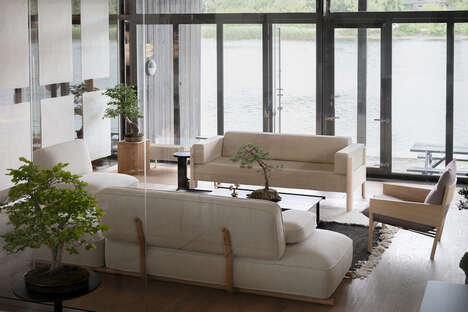
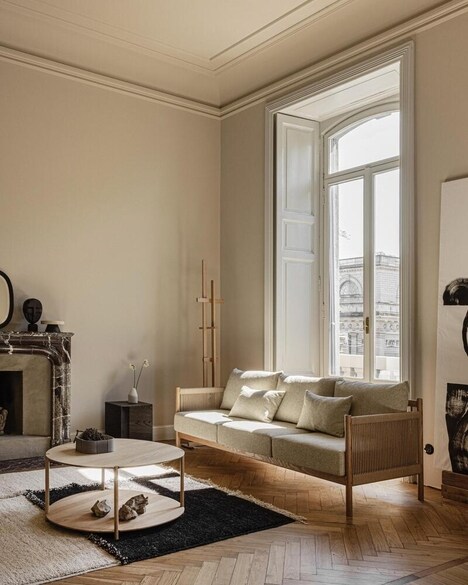
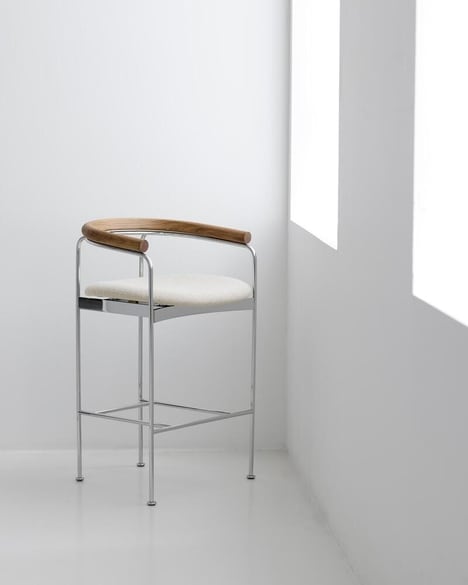
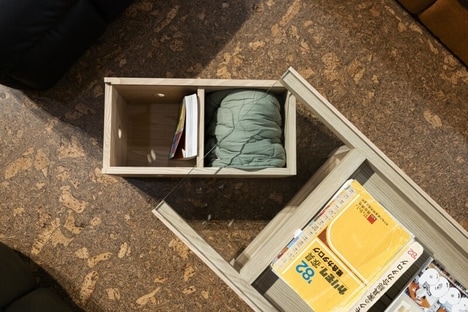
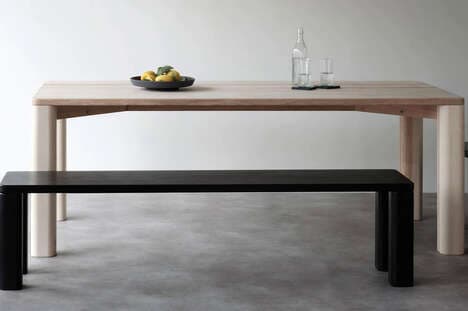
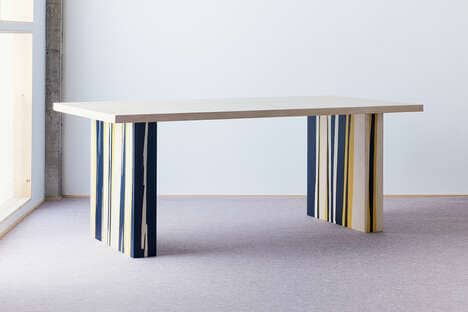
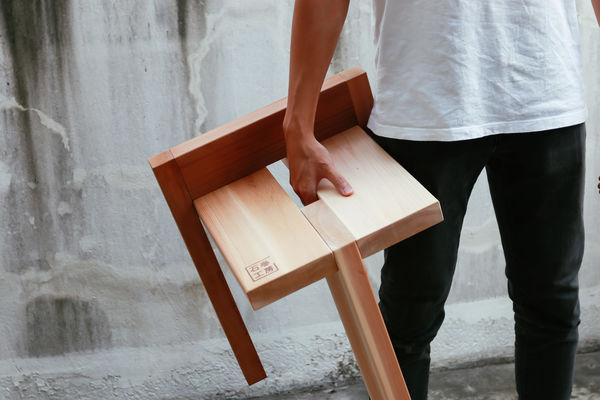
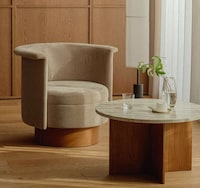
Norm Architects and Karimoku work in collaboration to design four pieces of wooden furniture for a newly renovated project in Kinuta. The Danish design studio and Japanese furniture manufacturer draw reference from both of its heritage in its design pieces. The designs feature a sofa with wooden frames, a coffee table designed after a Japanese temple, a paper-thin dining table, and a dining chair crafted from recyclable materials. These pieces are specifically made to furnish a series of townhouses on the west side of Tokyo.
The sofa is constructed from a type of cypress wood called hinoki, which is often used in Japan -- all of its joints are is display to reference traditional Japanese architecture designs as well as mid-century Danish furniture designs. The sofa's armrests extend around the seat to turn the backrest into a shelf as well. Japanese temples and shrines shape the frame of the coffee table and it is finished with a stone surface and wooden frame. The dining table explores dimensions so that it appears paper-thin from certain angles.
Image Credit: Jonas Bjerre-Poulsen and Masaki Ogawa
Key Themes Behind This Trend
- Wooden Furniture Design
- An opportunity to create innovative wooden furniture designs inspired by traditional Japanese and Danish influences.
- Sustainable Furniture Materials
- A chance to develop furniture using recyclable materials for a more sustainable and eco-friendly approach.
- Minimalist Furniture Design
- A trend towards creating furniture with clean, simple lines and a focus on functionality.
Where This Applies
- Furniture Manufacturing
- A disruptive innovation opportunity in the furniture manufacturing industry to embrace traditional and minimalist designs.
- Interior Design
- An opportunity for interior designers to incorporate wooden furniture with clean lines and sustainable materials into their projects.
- Home Renovation
- A trend in home renovation industry towards incorporating eco-friendly and minimalist designs using wooden furniture.