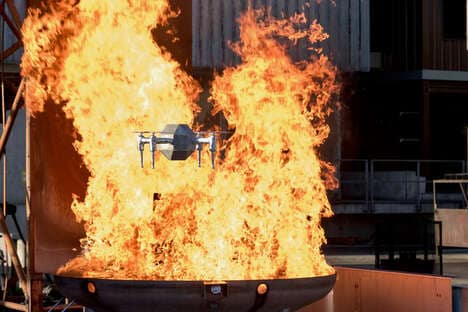
A team of researchers from North Carolina State University have developed a nanoscale coating that is designed to slow down the spread of fires. This is a noteworthy scientific achievement and absolutely necessary in today's day and age when fires, brought on by climate change, are devastating the world.
By working at the molecular level, the researchers have found a way to create a barrier between combustible materials and flames, effectively limiting the amount of oxygen available for the fire to propagate. The nanoscale coating has the potential to be a valuable addition to fire safety technologies. For example, the coating can be applied to various materials, including wood, and is almost undetectable once applied. The coating's versatility in application methods, such as spray or fume, makes it adaptable for different scenarios.
Image Credit: Shutterstock
What Makes This Trend Stand Out
- Fire-slowing Coatings
- Researchers have developed a nanoscale coating that creates a barrier between combustible materials and flames, limiting the amount of oxygen available for fire propagation.
- Climate Change Adaptation
- Given the devastating effects of fires caused by climate change, the development of fire-preventing coatings is a significant scientific achievement.
- Versatile Application Methods
- The nanoscale coating can be applied using different methods, such as spray or fume, increasing its adaptability for various scenarios.
Sectors Adopting This
- Construction
- The fire-slowing coatings can be applied to materials used in construction, providing enhanced fire safety measures.
- Manufacturing
- Manufacturers can utilize the nanoscale coating to enhance the fire resistance of their products, particularly in industries susceptible to fires.
- Fire Safety Technology
- The development of the nanoscale coating offers opportunities for advancement in the field of fire safety technology.