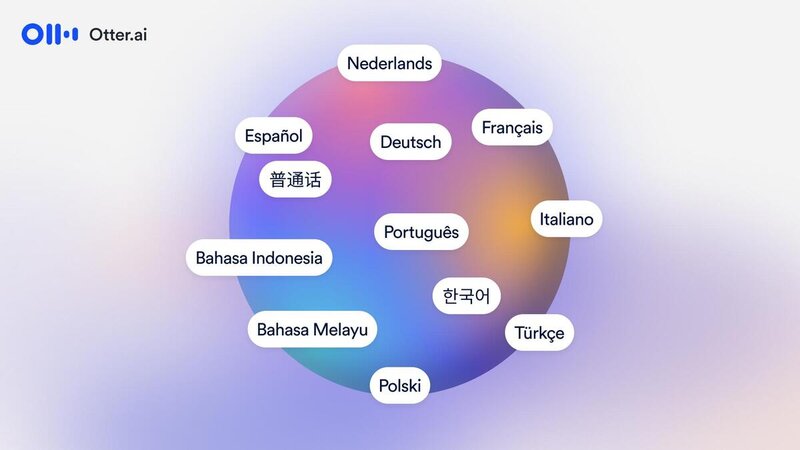
Multilingual AI meeting transcription is becoming more accessible as Otter.ai expands its platform with 27 additional languages and upcoming automatic language-switching capabilities. The system will recognize when participants change languages during conversations, allowing meetings to be transcribed without manually adjusting settings.
Thirteen languages are immediately available, with another 14 planned, bringing total support to 31 languages. The expansion extends beyond transcription to include meeting summaries, speaker identification, action items, and searchable conversations. Otter.ai develops its speech recognition models internally, maintaining control over audio processing. Its English recognition technology achieved 96% accuracy in benchmark testing.
For international businesses, these capabilities could reduce communication barriers and simplify collaboration across multilingual teams. Automated meeting documentation and follow-up workflows may also reduce administrative workloads. For Otter.ai, broader language support creates opportunities to attract global organizations while strengthening its enterprise software offering.
Image Credit: Otter.ai
What Makes This Trend Stand Out
- Multilingual Meeting Intelligence
- Cross-language transcription, summaries, and searchable records create new value in global collaboration platforms where teams operate fluidly across regions.
- Automatic Language Switching
- Real-time recognition of language changes introduces room for smarter conversational AI that adapts to multilingual dialogue without manual setup.
- AI Workflow Documentation
- Automated action items, speaker labels, and meeting recaps point to growing demand for productivity tools that convert conversations into structured business outputs.
Sectors Adopting This
- Enterprise Software
- Global organizations are becoming a stronger market for collaboration suites that embed multilingual AI as a core feature rather than an add-on.
- Business Communications
- Meeting platforms can differentiate through intelligent transcription layers that reduce administrative friction and improve knowledge sharing across distributed teams.
- Artificial Intelligence
- Internally developed speech recognition models offer competitive advantage as providers seek higher accuracy, data control, and specialized language coverage.