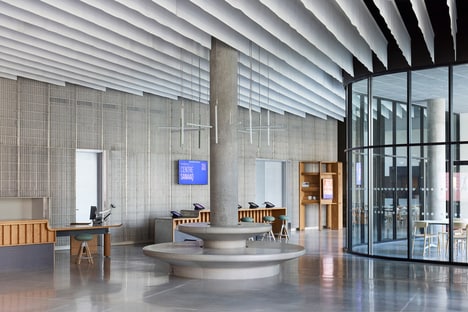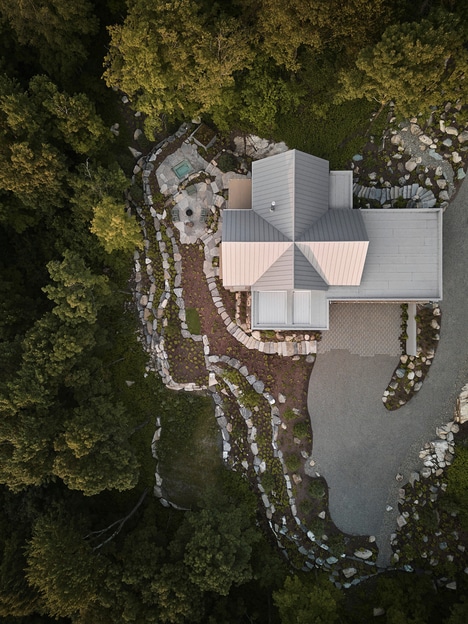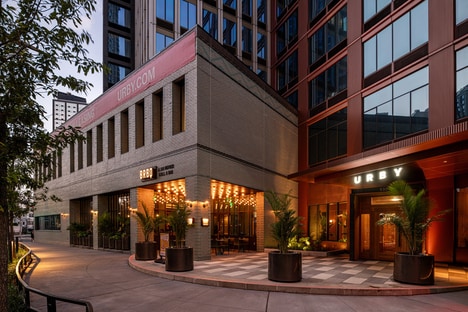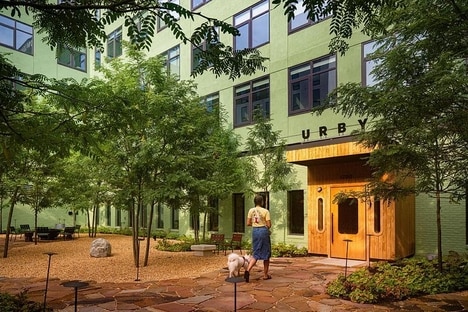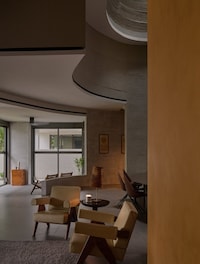
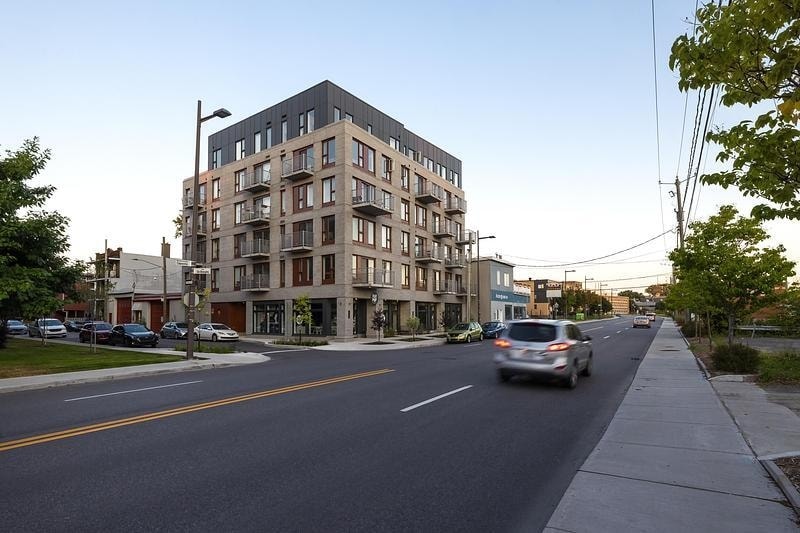
Franky is the name of a mixed-use development project in Quebec City. Designed by Quinzhee Architecture, the structure offers twenty-four residential units and three commercial spaces designed to foster social connection and environmental responsibility without on-site car parking.
As a mixed-use development, Franky caters to a modern, community-oriented lifestyle. The building's configuration places commercial spaces directly on the boulevard to encourage street-level interaction, while residential units are accessed from a quieter side street. Covered areas and landscaped islands in front of the shops provide inviting spaces for gathering and movement. Inside, high ceilings and flexible layouts allow commercial spaces to adapt to evolving community needs over time.
As a tangible expression of this vision, Quinzhee also created the Franky Bag, a Tyvek accessory illustrated by local artist Charles Turcotte.
Image Credit: Anne Rousseau
What's Driving This Trend
- Car-free Urban Living
- Residential complexes designed without on-site parking create demand for integrated mobility services and local amenity networks that reconfigure urban transportation and land use economics.
- Ground-level Retail Activation
- Placing commercial units directly on boulevards amplifies street-level commerce potential and fosters continuous pedestrian engagement that can reshape retail footprints and neighborhood vibrancy.
- Flexible Commercial Footprints
- High ceilings and adaptable interiors enable multi-use retail and community configurations, encouraging business models that pivot between pop-ups, co-working and experiential offerings.
Who This Affects Most
- Real Estate Development
- The shift toward mixed-use, parking-free projects signals opportunities for developers to rethink site value, density strategies and long-term asset adaptability.
- Retail Leasing and Management
- Demand for smaller, flexible street-facing commercial spaces favors leasing structures and service bundles tailored to transient, community-oriented operators.
- Urban Mobility and Microtransit
- Reduced parking provision increases pressure on alternative transit solutions and last-mile services that could redefine modal share and neighborhood accessibility.