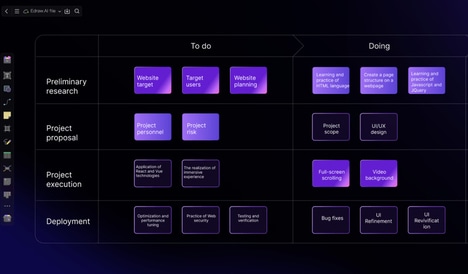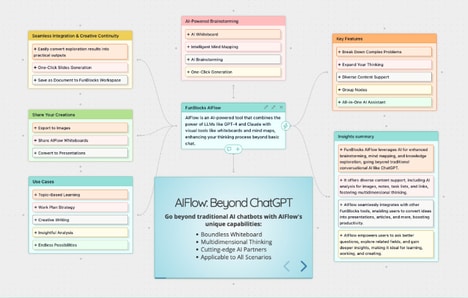

Miro 2.0 positions itself as an AI-powered innovation workspace, designed to support teams moving from ideation to execution. It enables users to transform unstructured input — like sticky notes or brainstorming sessions — into structured formats such as timelines, tables, and briefs.
The platform integrates artificial intelligence to generate prototypes, plans, or documents instantly, helping reduce manual work and streamline workflows. This makes it particularly useful for cross-functional teams managing complex projects or product development cycles. By offering a unified space to collaborate visually and functionally, Miro 2.0 supports more efficient decision-making and execution. Its capabilities are aligned with the growing need for speed, clarity, and automation in modern business environments, especially among product managers, strategists, and innovation leads.
Image Credit: Miro 2.0
What Makes This Trend Stand Out
- AI-driven Ideation Tools
- AI-driven ideation tools transform scattered brainstorming inputs into actionable project components, enhancing team productivity.
- Visual Collaboration Platforms
- Visual collaboration platforms offer a seamless integration of design and execution elements, fostering effective team cooperation across various business functions.
- Automated Workflow Optimization
- Automated workflow optimization reduces manual tasks in complex projects, simplifying processes and expediting project timelines.
Sectors Adopting This
- Project Management Software
- The project management software industry benefits from AI integration to offer more streamlined and effective solutions for managing complex workflows.
- Product Development Solutions
- Product development solutions are increasingly incorporating AI to speed up the transition from ideation to execution, accommodating fast-paced market demands.
- Enterprise Collaboration Tools
- Enterprise collaboration tools leverage AI to improve decision-making processes, supporting cross-functional team interactions in dynamic business settings.