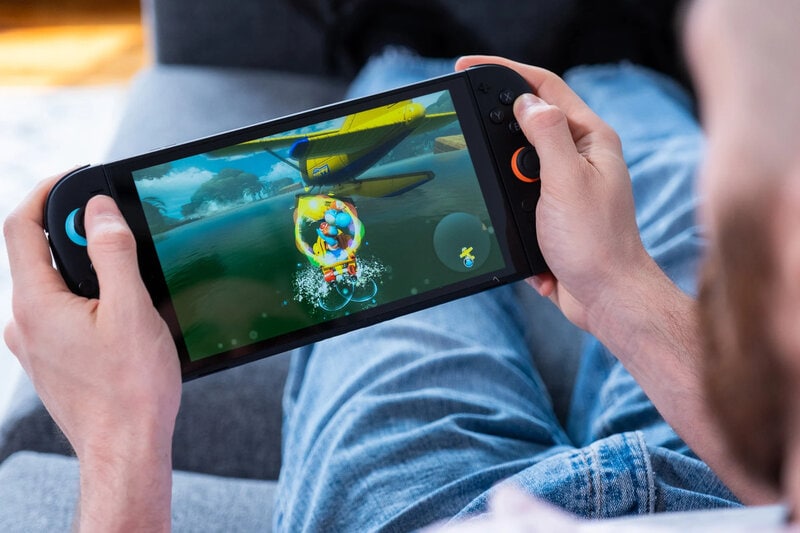
Nintendo's Switch 2 now uses its built-in microphone to let players hum tunes or speak to in-game characters, turning ambient audio into input. The handheld's small punch-hole mic sits left of the game card slot and can pick up sounds from across the room, enabling gameplay that reacts to voice and humming. This adds a playful, tactile control layer to the device.
The Legend of Zelda remake accepts hummed ocarina melodies and includes a practice mode to help players match notes. Pikmin 4: Nintendo Switch 2 Edition + Dandori Academy accepts spoken commands for the mount Oatchi, with nine recognized commands such as “rush,” “go to work,” and praise like “good pup.” Nintendo plans a small plastic ocarina and Hori will sell a $50 electronic ocarina with preprogrammed songs.
The mic-driven input creates hands-free, performative interaction and a more personality-driven companion experience. The system's modest audio quality suggests early-stage experimentation, but the feature could inspire designers to build more voice- and hum-based mechanics into future games.
Image Credit: Adriano Contreras / Gizmodo / Nintendo
Key Themes Behind This Trend
- Voice-responsive Gameplay
- Microphone-based controls create room for games that treat speech, humming, and ambient sound as expressive inputs beyond buttons and touchscreens.
- Musical Input Mechanics
- Hummed melodies and note-matching modes point to more accessible rhythm interactions that blend performance, learning, and narrative progression.
- Personality-driven Companions
- Spoken commands and praise-based responses can deepen emotional attachment to in-game allies through more natural, pet-like interaction loops.
Where This Applies
- Gaming
- Console makers and studios can differentiate play experiences through audio-reactive mechanics that expand control schemes and social engagement.
- Consumer Electronics
- Built-in microphones and companion peripherals suggest new hardware ecosystems around expressive, sound-based interaction for entertainment devices.
- Edtech
- Practice modes tied to pitch, listening, and repetition could support playful music learning experiences inside mainstream interactive platforms.