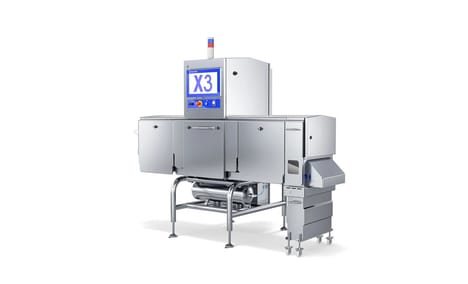
Mettler-Toledo Product Inspection introduced the X56 DXD+, a dual-energy photon-counting x-ray system for packaged goods, featuring embedded AI designed to improve contaminant detection. The system was developed for production lines requiring automated inspection of sealed products, using dual-energy imaging and photon-counting sensors to distinguish materials with greater precision.
Technical details released with the launch highlighted production-line integration options, adjustable detection thresholds and software tools supporting image analysis and inspection workflows. Mettler-Toledo said the system is designed to improve detection performance in products with varying density or overlapping textures, particularly where conventional single-energy systems may struggle.
For manufacturers, the X56 DXD+ aims to improve contamination detection accuracy while reducing false rejects and strengthening quality assurance processes.
By combining dual-energy imaging with AI-assisted inspection, the launch reflects a wider shift toward smarter, sensor-driven quality control systems in food and consumer goods manufacturing.
Image Credit: Shutterstock/testing
What Makes This Trend Stand Out
- AI-embedded X-ray Inspection
- Integration of onboard AI with x-ray systems enables more reliable contaminant classification and the potential reduction of false rejects in high-throughput production environments.
- Dual-energy Photon-counting Imaging
- The use of dual-energy photon-counting sensors creates opportunities for enhanced material discrimination and improved detection of overlapping or similar-density inclusions within packaged goods.
- Sensor-driven Quality Control Platforms
- Emergence of integrated sensor and software ecosystems allows centralized analysis of multi-modal inspection data, supporting predictive quality insights and adaptive thresholding.
Sectors Adopting This
- Packaged Food Manufacturing
- High-volume food lines stand to benefit from advanced x-ray inspection that can detect contaminants in complex, multi-component products while minimizing throughput losses.
- Consumer Goods Production
- Producers of sealed consumer items could see improved quality assurance for heterogeneous assemblies where traditional single-energy inspection struggles to differentiate materials.
- Inspection Equipment Software Providers
- Vendors of imaging and inspection software may capture value by developing AI models and workflow tools that integrate with dual-energy hardware for customizable detection profiles.