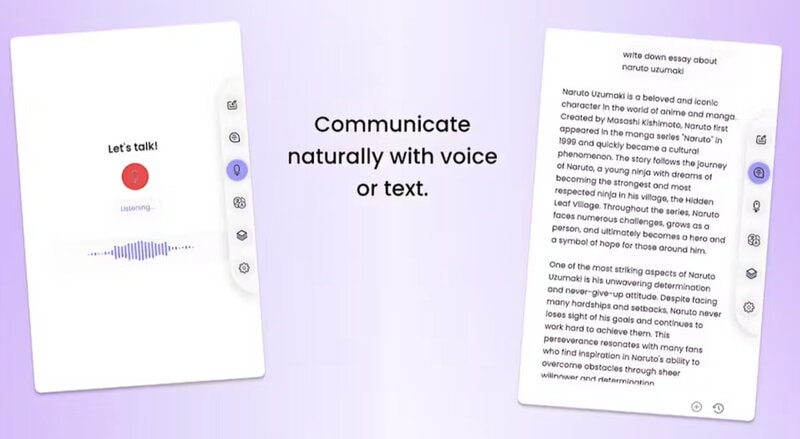
Megan is an AI-powered voice assistant designed to make browsing the web faster and more hands-free. Users can give voice commands to control webpages, play media, summarise information, and create content without relying entirely on their keyboard or mouse.
The assistant also includes built-in tools for tasks such as translation, note-taking, summarisation, and chatting with an AI. By bringing these capabilities together inside the browser, Megan aims to reduce the need to switch between different apps and services. It can help users quickly understand web content, capture useful information, and complete everyday browsing tasks through voice. Megan is designed to turn the browser into a more interactive and AI-powered workspace. It offers a more natural way to interact with the web, particularly for users who want to get things done without constantly clicking and typing.
Image Credit: Megan
What's Driving This Trend
- Voice-first Browsing
- Hands-free web navigation creates room for browser experiences that prioritize spoken intent over traditional clicking and typing.
- Embedded AI Workspaces
- Integrated summarization, translation, note-taking, and content creation within browsers signal a shift toward consolidated productivity environments.
- Conversational Web Control
- Natural-language commands introduce new possibilities for making digital interfaces more accessible, adaptive, and task-aware.
Who This Affects Most
- Web Browsers
- Browser platforms can evolve into intelligent operating layers that manage information, media, and workflows through AI-driven interaction.
- Productivity Software
- Work tools gain differentiation when everyday tasks such as research capture, writing, and summarization become available directly in browsing sessions.
- Accessibility Technology
- Voice-enabled browsing expands digital access for users who benefit from reduced reliance on keyboards, mice, and complex visual navigation.