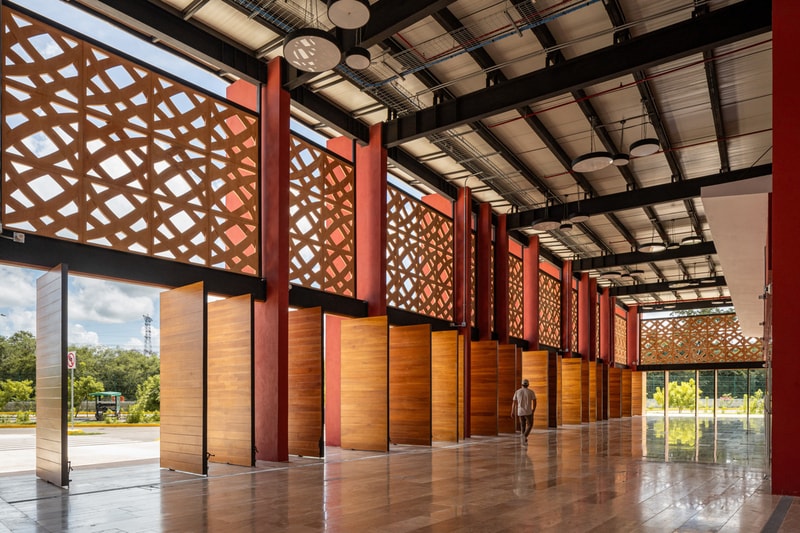
The Maxcanú Station is a terracotta railway terminal designed by Gi21 Arquitectura as part of the 966-mile Tren Maya railway network in Mexico's Yucatán Peninsula. Covering 68,470 square feet, the station features a curved layout with multiple entrances and sightlines that maintain visual connections to the surrounding landscape. Full-height plastered concrete brackets reference the structural language of the ancient Maya city of Palenque while supporting cross-ventilation and integrated sun shading. Finished in a cochineal-derived terracotta pigment, the building also incorporates tropical wood pivot doors and prefabricated concrete lattice panels inspired by regional textile patterns.
The station organizes ticketing, waiting areas, courtyards, and restrooms around a central atrium beneath an exposed beam-and-vault roof structure. Local travertine flooring and black-painted steel framing define the interior, while varying lattice densities improve airflow, daylight, and platform shading.
Image Credit: OHFA
Key Themes Behind This Trend
- Vernacular Transit Architecture
- Regional materials, indigenous references, and climate-conscious forms are reshaping rail hubs into culturally specific mobility landmarks with stronger tourism and civic identity value.
- Passive Cooling Terminals
- Cross-ventilation, shaded courtyards, and porous lattice systems create lower-energy station environments suited to hot climates and high-traffic public infrastructure.
- Patterned Prefab Facades
- Prefabricated panels inspired by local textiles blend construction efficiency with distinctive place-based aesthetics for scalable infrastructure design.
Where This Applies
- Rail Transportation
- Culturally integrated station design expands the role of rail networks from mobility corridors into destination-driven regional development assets.
- Architecture and Design
- Bioclimatic strategies and heritage-informed detailing offer new models for public buildings that balance performance, identity, and visual continuity with the landscape.
- Sustainable Building Materials
- Natural pigments, local stone, tropical wood, and modular concrete systems support differentiated supply chains for low-impact, regionally expressive construction.