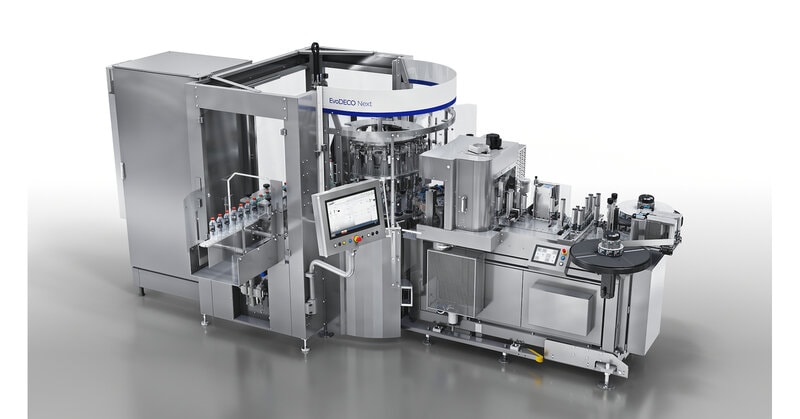
Sidel has introduced material-saving labeling systems with EvoDECO Next, allowing beverage manufacturers to decorate bottles using smaller labels instead of traditional full-wrap designs. The system combines partial labeling with an integrated production platform, helping companies reduce packaging materials without compromising manufacturing speed or visual appeal.
EvoDECO Next features a rotary cutting mechanism that handles shorter labels, a Smart Buffer that maintains production speed during reel changes, and a Smart Camera that eliminates conventional reference marks. According to Sidel, certain configurations can reduce label surface area by up to 75%. One modeled production scenario estimates annual savings of 208.4 tonnes of BOPP material.
For manufacturers, the technology could lower packaging expenses while reducing associated emissions. Sidel's example projects approximately €723,000 in yearly material savings, potentially making more resource-efficient packaging financially attractive to high-volume producers.
Image Credit: Sidel
What Makes This Trend Stand Out
- Partial-label Packaging
- Smaller decorative labels create room for brands to reduce plastic use while preserving shelf impact and high-speed bottling performance.
- Waste-reducing Production Lines
- Integrated buffering, cutting, and inspection systems point to packaging operations where material efficiency is embedded directly into throughput-focused manufacturing.
- Mark-free Vision Control
- Camera-based alignment that removes reference marks signals a shift toward cleaner label design, reduced substrate requirements, and more flexible packaging formats.
Sectors Adopting This
- Beverage Packaging
- High-volume drink producers face new possibilities for lowering packaging costs and emissions through reduced-label bottle decoration systems.
- Packaging Machinery
- Equipment suppliers can differentiate through platforms that combine automation, material minimization, and consistent production speeds for sustainability-driven manufacturers.
- Plastic Films
- Declining label surface areas may reshape demand for BOPP and related substrates as converters prioritize thinner, shorter, and more resource-efficient applications.