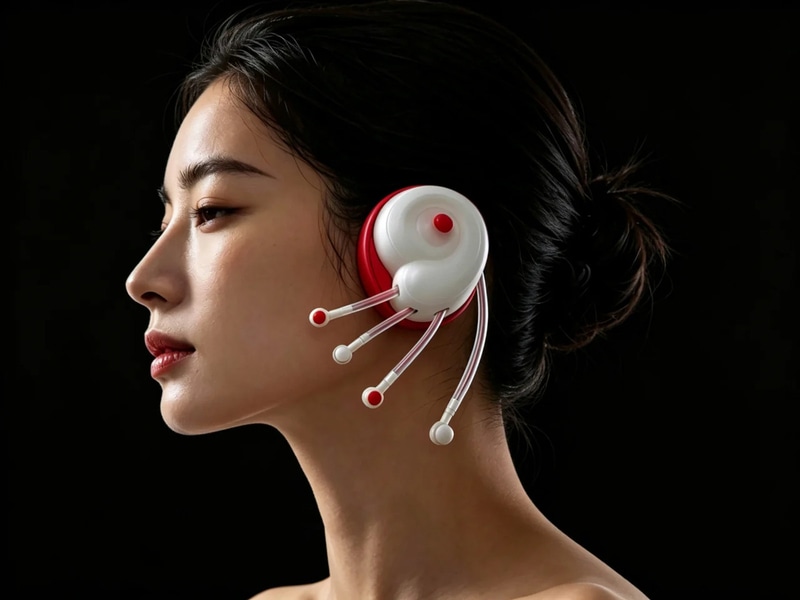
The Live Beats concept was designed by Haji Yang as a wearable that converts music into tactile feedback when surrounding noise overwhelms conventional audio. Instead of relying solely on sound, the device uses four flexible tentacles that rest against the wearer's cheeks and reproduce rhythmic patterns through gentle taps.
An ambient sensor continuously monitors environmental noise and activates the tactile system when audio becomes difficult to hear. A companion app analyzes each track, separating rhythmic and melodic elements to generate synchronized touch patterns that preserve the music's beat.
The wearable features an organic form inspired by conch shells and octopus tentacles, with a translucent exterior and a spiral internal structure. Interchangeable sponge and metal touch tips allow users to adjust how the tactile feedback feels against the skin.
Image Credit: Haji Yang
What's Driving This Trend
- Tactile Audio Interfaces
- Music experiences are expanding beyond sound into skin-based feedback systems that make rhythm and melody accessible in noisy, hearing-limited, or sensory-enhanced environments.
- Adaptive Sensory Wearables
- Ambient-aware devices that shift between audio and haptic output signal new potential for personal technology that responds fluidly to changing real-world conditions.
- Customizable Haptic Design
- Interchangeable tactile materials and app-generated feedback patterns point to more personalized sensory products that let users shape how digital media feels on the body.
Who This Affects Most
- Wearable Technology
- The category is moving toward expressive, body-integrated devices that combine environmental sensing, biometric comfort, and multisensory media delivery.
- Music Technology
- Streaming, production, and playback platforms could evolve through haptic translation tools that preserve musical engagement when traditional listening is compromised.
- Accessibility Technology
- Touch-based sound interpretation introduces inclusive product pathways for people navigating hearing differences, sensory processing needs, or acoustically challenging spaces.