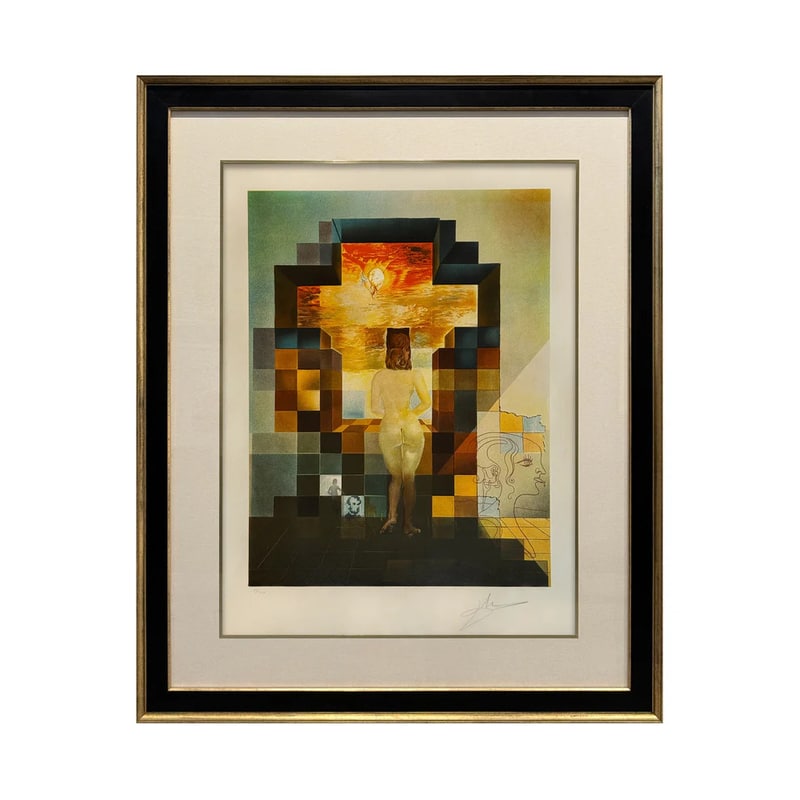
Lincoln in Dalivision is a 1977 mixed-media photolithograph by Salvador Dalí, featuring original etched remarque and embossing and signed in pencil. The image plays with scale: viewed up close it shows Gala by the Mediterranean, while from about 65 feet back the composition resolves into a portrait of Abraham Lincoln. This edition is number 53 of 350 and measures roughly 24-3/8 by 17-1/4 inches on wove paper.
The work traces its idea to Leon Harmon’s 1973 photomosaic of Lincoln, which Dalí adapted into paint between 1974 and 1976 before producing this print. Production details include color photolithography with embossing and a hand-signed lower edge, signaling its place in late-career Dalí experimentations with optical trickery. The piece’s dual imagery relies on viewing distance to shift perception.
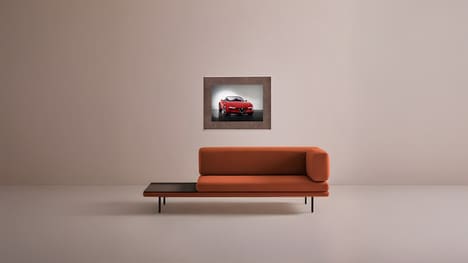
For collectors and décor-minded buyers the print offers a conversation-starting focal point that rewards different viewing distances and lighting. Its numbered, signed status and measurable provenance make it a collectible iteration of a broader trend toward optical and meta-narrative art that blends portraiture with visual puzzle techniques.
Image Credit: Uncrate
Why This Trend Is Growing
- Perceptual Photolithography
- Blending traditional photolithography with perceptual tricks creates artworks that shift interpretation based on viewing distance and lighting conditions, enabling new forms of visual surprise.
- Optical-mosaic Composition
- Integration of photomosaic techniques and micro imagery produces multi-scale compositions that resolve into distinct portraits or scenes from different vantage points, expanding narrative complexity in single pieces.
- Limited-edition Hybrid Media
- Combining hand-signed limited runs with tactile processes like embossing and etched remarques yields collectible objects that emphasize provenance and multisensory engagement.
Industries Being Reshaped
- Fine Art Collectibles
- Collecting markets are primed for authenticated, sensory-rich editions that command premium valuation through scarcity, provenance, and unique production techniques.
- Interior Design and Experiential Spaces
- Spatially responsive artworks that change with viewer position offer new centerpiece opportunities for hospitality and corporate environments seeking dynamic, conversation-starting décor.
- Digital Imaging and Augmented Reality
- Computational imaging and AR layering enable hybrid physical-digital works that can morph between images or reveal latent content depending on distance, device, or lighting, creating cross-channel engagement possibilities.