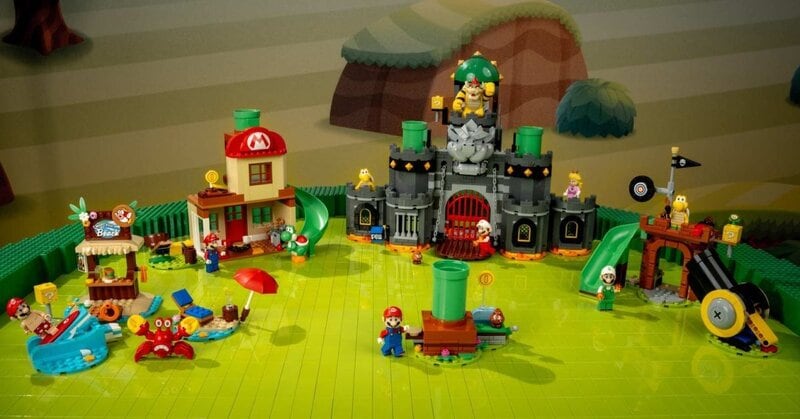
LEGO reshaped its Nintendo line with 'Super Mario' sets built around the theme's first proper minifigures, turning the Mushroom Kingdom into a more hands-on play experience. The wave included 'Yoshi at Mario's House' and 'Bowser's Rumbling Race,' featuring Mario, Luigi, Yoshi, Peach, and Toad.
That scale shift changed how the builds worked. Instead of leaning on oversized character models, LEGO turned homes, vehicles and race scenes into connected play spaces, letting kids move familiar figures through them and combine sets more naturally. The line felt closer to a classic minifigure world.
For consumers, this made Super Mario easier to enter and expand over time, rather than starting with a single display-sized build. It also tapped into cyclicality, translating a long-running game universe into tactile, character-led play that worked on a shelf and in hand.
Image Credit: Mario/Minifigs
Key Themes Behind This Trend
- Minifigure-led Licensing
- Recognizable characters in smaller collectible formats create expandable play ecosystems that blend fandom, affordability, and repeat purchasing.
- Connected Play Worlds
- Modular homes, vehicles, and scenes deepen engagement by allowing consumers to build interoperable environments around familiar entertainment properties.
- Tactile Gaming Extensions
- Physical toy adaptations of digital universes offer screen-adjacent experiences that preserve narrative familiarity while encouraging hands-on interaction.
Where This Applies
- Toy Manufacturing
- Character-driven building systems provide manufacturers with scalable product architectures that support ongoing releases and cross-set compatibility.
- Video Game Licensing
- Established game franchises gain new commercial life when translated into collectible physical formats that appeal to children, collectors, and nostalgic fans.
- Children's Entertainment
- Hybrid play formats connect media worlds with tangible storytelling, expanding how young audiences interact with branded characters beyond screens.