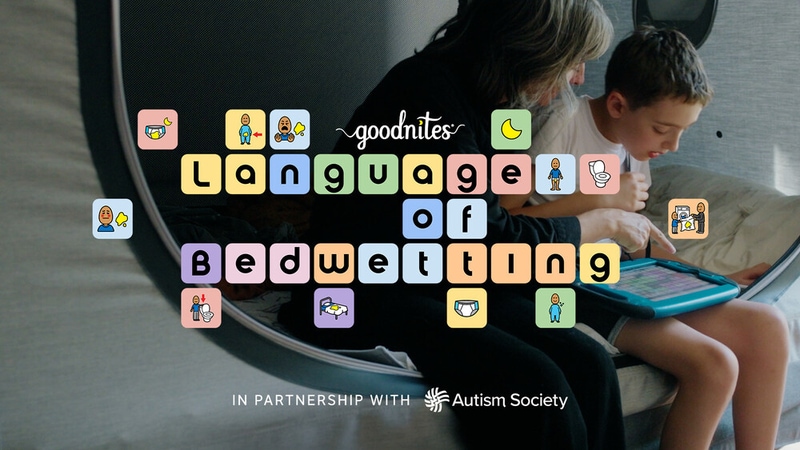
Goodnites' Language of Bedwetting is the first complete language designed to help Autistic children express needs and fill a gap in Augmentative and Alternative Communication (AAC) vocabulary. Developed with a licensed speech-language pathologist and the Autism Society of America, this free communication tool gives non-speaking or minimally speaking individuals the vocabulary to express their needs, wants and feelings around a potential nightly experience.
Bedwetting is common—it occurs in one in six kids—but according to a study in the Pediatric Journal of Urology, Autistic children are more often affected by bedwetting. "Goodnites is the leading nighttime underwear brand for children, and for many Autistic children, that need often lasts longer," said Dan Jackson, Vice President & General Manager at Kimberly-Clark, Child Care. "We know confidence at night goes beyond staying dry—it's also about being understood. The Language of Bedwetting helps give Autistic children the words they've never had, while giving families and caregivers the tools to support them."
Key Themes Behind This Trend
- Specialized AAC Vocabularies
- A rise in condition- and situation-specific AAC lexicons addressing gaps like nighttime routines creates new avenues for expressive precision among non-speaking individuals.
- Sensory-inclusive Communication Design
- Integration of sensory-friendly visuals and language into communication tools reduces stigma and aligns product experiences with neurodiverse processing preferences.
- Cross-sector Collaborative Toolkits
- Partnerships between consumer brands, clinicians, and advocacy groups produce validated, free-to-use communication resources that broaden reach and trust.
Where This Applies
- Healthcare Technology
- Development of interoperable AAC apps and platforms tailored to niche clinical needs enables more precise patient-provider communication and monitoring.
- Consumer Hygiene Products
- Brands that combine product design with embedded communication aids and educational materials meet underserved needs for dignity and understanding during intimate caregiving moments.
- Special Education Services
- Schools and therapists adopting standardized, situation-specific communication sets support consistent language development and improved caregiver coordination.