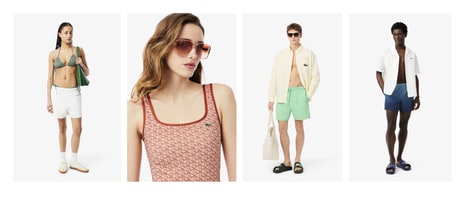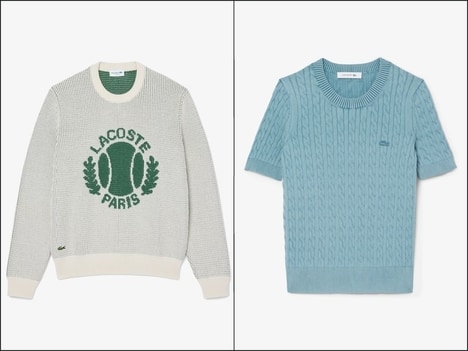
Lacoste is leaning into its manufacturing roots with a new collection entirely produced in France, positioning domestically-made basics as the anchor of the brand's offering. The lineup spans both men's and women's categories, featuring the brand's signature polos alongside complementary layering pieces—zip-up sweatshirts, sweaters, and a piqué dress—all produced using what the brand describes as time-honored techniques and refined materials.
The collection draws from Lacoste's heritage as a French sportswear institution, framing the made-in-France designation as both a quality marker and a statement about production values. Striped polos, a recurring design element across genders, sit alongside solid iterations, while the supporting pieces maintain the brand's restrained aesthetic. Sweatpants and zip-ups offer contemporary utility without departing from Lacoste's minimalist vocabulary.
Image Credit: Lacoste
What's Driving This Trend
- Heritage-driven Fashion
- Brands are increasingly leveraging their historical roots to create narratives that emphasize authenticity and craftsmanship.
- Domestic Production Revival
- There is a growing emphasis on producing goods locally as brands highlight domestic manufacturing as a measure of quality and ethical production.
- Gender-neutral Design Elements
- Fashion collections are incorporating unisex design elements, blurring traditional gender lines while maintaining brand identity.
Who This Affects Most
- Apparel Manufacturing
- The resurgence of local production facilities is poised to transform apparel manufacturing, creating opportunities for high-quality, region-specific garments.
- Sustainable Fashion
- An increased focus on responsible production and sourcing elevates sustainable practices within the fashion industry, catering to eco-conscious consumers.
- Luxury Sportswear
- Premium sportswear is adapting by incorporating heritage aesthetics and refined materials, appealing to consumers seeking both style and function.