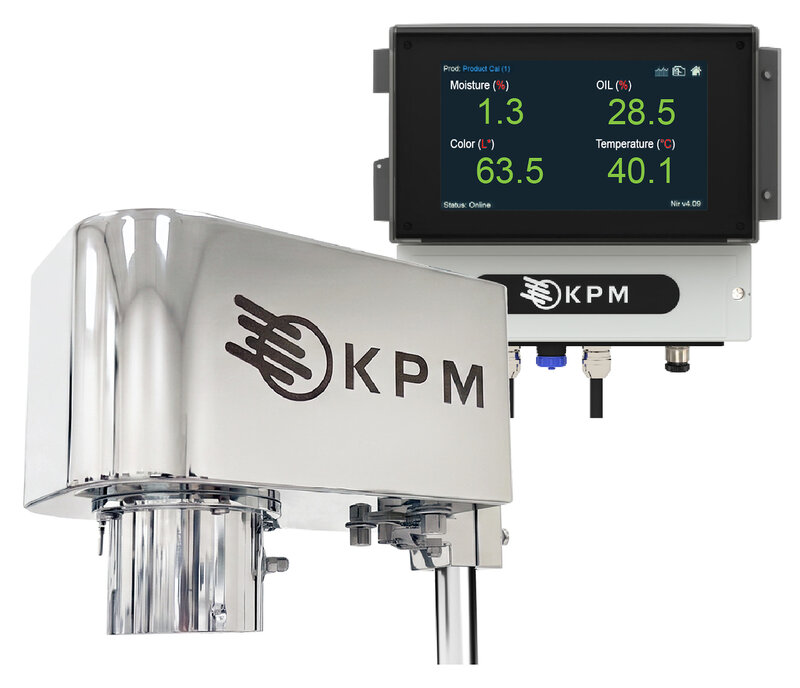
KPM Analytics has introduced the MCT700 Series of in-line near-infrared sensors, a family of non-contact measurement devices specifically engineered for the food processing industry to continuously monitor moisture, fat and oil content, product color, and temperature directly on production lines.
The series comprises three models with varying capabilities and durability ratings — the MCT790, which adds color measurement to the standard parameters and features an IP69K-rated stainless steel housing capable of withstanding harsh washdown procedures with aggressive cleaning agents; the MCT750, which offers similar ruggedness with a sapphire window and advanced cooling for extreme environments but without color analysis; and the MCT700, which provides core functionality in a slightly less robust package suitable for less demanding conditions.
KPM Analytics' sensors capture data at speeds of up to 100 readings per second, enabling real-time analysis of individual products such as cookies, crackers, and snacks as they move through ovens and sprayers.
Image Credit: KPM Analytics
Key Themes Behind This Trend
- Real-time Quality Sensing
- Continuous in-line measurement creates potential for food processors to reduce batch variability, improve consistency, and detect defects before products leave the line.
- Non-contact Food Analytics
- Near-infrared inspection enables hygienic monitoring of moisture, fat, oil, color, and temperature without interrupting production flow or touching finished goods.
- Ruggedized Factory Sensors
- Washdown-resistant housings and durable optical windows reflect growing demand for measurement systems that perform reliably in harsh processing environments.
Where This Applies
- Food Processing
- Automated composition monitoring can support tighter process control across baked goods, snacks, and other high-volume product categories.
- Industrial Automation
- High-speed sensor data integration offers manufacturers new ways to connect inspection, control systems, and predictive optimization on production lines.
- Quality Assurance
- Inline analytics shift quality management from periodic sampling toward continuous verification, creating room for faster compliance checks and waste reduction.