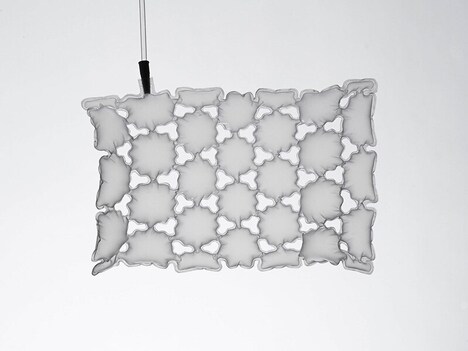
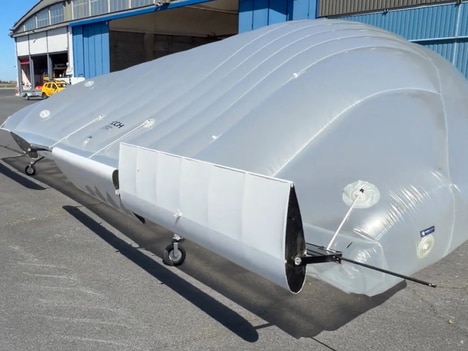
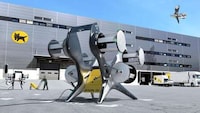
The Kirigami Parachute concept from Polytechnique Montreal explores how slits and folds in a parachute surface could stabilize descending packages and reduce drift. Rather than a classic parachute, this design borrows from the paper art of kirigami to introduce cutouts that manage airflow, creating drag more predictably and limiting oscillation. The concept aims to guide parcels closer to their target, especially in windy or unpredictable conditions.
Because the structure can fold flat, it fits neatly into a drone’s payload compartment without adding bulk. Simulations suggest it offers more precise landings than round parachutes while using less material. The concept also promises better energy efficiency through lighter weight and decreased drag during descent. Though not yet commercial, its principles show a path toward more accurate, sustainable drone logistics where package safety meets aerodynamic ingenuity.
Image Credit: Mechanical Engineering department at Polytechnique Montreal
What's Driving This Trend
- Innovative Packaging Technologies
- Incorporating kirigami-inspired structures into packaging offers a breakthrough method for enhancing aerial delivery precision.
- Sustainable Delivery Solutions
- The use of lightweight materials in parachute systems promotes eco-friendly practices by reducing energy consumption in drone logistics.
- Precision Aerial Delivery
- The advancement in parachute designs for drones enhances the accuracy of deliveries, significantly impacting last-mile logistics.
Who This Affects Most
- Drone Logistics
- Incorporating kirigami principles in drone logistics systems could transform delivery accuracy and efficiency in challenging environments.
- Material Sciences
- Exploring new applications of lightweight and durable materials in parachute design can lead to breakthroughs in various industries beyond logistics.
- Aerospace Innovation
- The kirigami parachute's advancements highlight opportunities for revolutionizing aerodynamics in unmanned aerial systems.