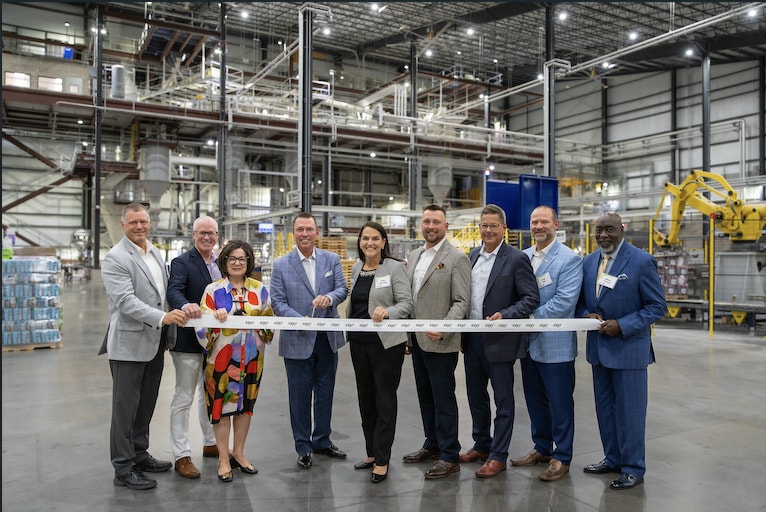
KENT WORLDWIDE has celebrated the grand opening of a new 174,000-square-foot flagship manufacturing facility for its World's Best Cat Litter product line. This space is located on 70 acres in Muscatine, Iowa. The milestone was celebrated with a ribbon-cutting ceremony attended by local and state economic development officials.
KENT WORLDWIDE has made a name for itself for its corn-based, plant-based litter, which the company has been producing for more than 75 years. The new facility will supercharge the continuing innovation of this product line, with research and development spaces designed for future expansion. KENT WORLDWIDE also notes that thanks to this expansion, it is employing approximately 96 people.
The new flagship manufacturing facility sits strategically near the company's headquarters and distribution center.
Image Credit: KENT WORLDWIDE
What's Driving This Trend
- Plant-based Pet Care
- Corn-derived litter reflects a broader shift toward renewable pet products that can disrupt petroleum- and clay-dependent categories with cleaner material sourcing.
- Integrated R&D Facilities
- Purpose-built research spaces within manufacturing sites create faster pathways for formulation improvements, packaging advances, and premium pet care differentiation.
- Regional Production Hubs
- Strategically located facilities near headquarters and distribution centers signal a more resilient operating model with advantages in logistics, workforce development, and speed to market.
Who This Affects Most
- Pet Products
- Sustainable litter innovation is reshaping a high-volume consumer category where performance, odor control, and environmental positioning increasingly influence brand growth.
- Agricultural Materials
- Corn-based inputs highlight new value streams for agricultural commodities as plant-derived materials expand into everyday household and companion animal applications.
- Manufacturing
- Large-scale specialty production facilities demonstrate how automation, localized employment, and embedded innovation capacity can redefine competitiveness in consumer goods manufacturing.