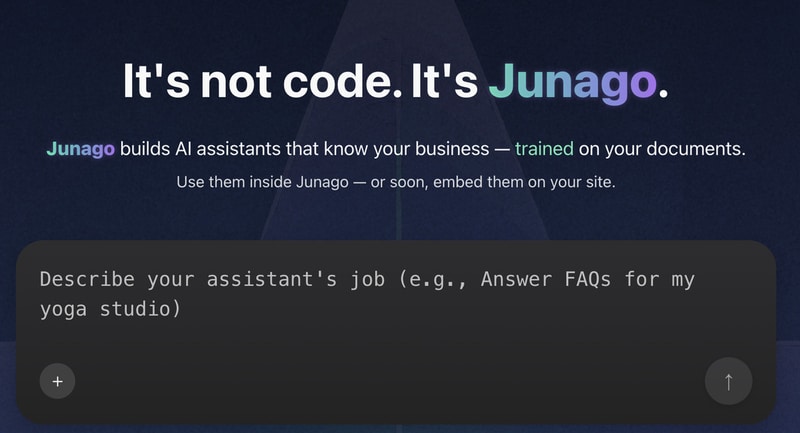
Building an AI assistant often requires technical setup, integrations, or custom development. Junago streamlines the process by allowing users to describe an assistant’s role in plain language and generate a working assistant within minutes.
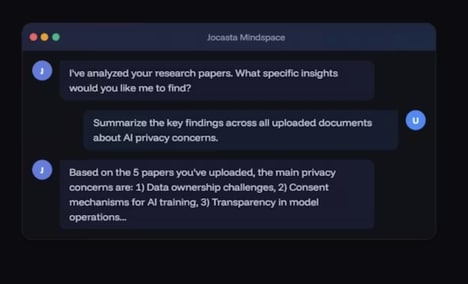
Additional context can be provided through uploaded documents, enabling assistants to reference business-specific information when responding to questions. This approach helps tailor responses to a company’s processes, services, or internal knowledge. The platform focuses on reducing the complexity of assistant creation while keeping the setup process accessible to non-technical users. Assistants can be deployed within the Junago environment, with support for website embedding planned for future releases.
By combining natural-language configuration with document-based training, it provides a straightforward path to creating AI assistants that reflect a business’s own information and workflows.
Image Credit: Junago
Key Themes Behind This Trend
- No-code AI Assistants
- Plain-language setup lowers technical barriers for businesses seeking customized AI support without developer-heavy implementation cycles.
- Document-trained Automation
- Company files and internal knowledge bases create more context-aware assistants that reflect proprietary workflows, policies, and service details.
- Embedded Business Chatbots
- Website-ready AI assistants introduce scalable customer and employee support models that can operate across digital touchpoints with minimal setup.
Where This Applies
- Enterprise Software
- Accessible assistant builders expand the market for workflow-specific AI tools that serve teams without requiring complex software customization.
- Customer Service
- Business-trained conversational systems reshape support operations by delivering faster, more consistent answers based on company-specific information.
- Knowledge Management
- Internal documents become interactive intelligence layers as AI assistants transform stored information into searchable, conversational business guidance.