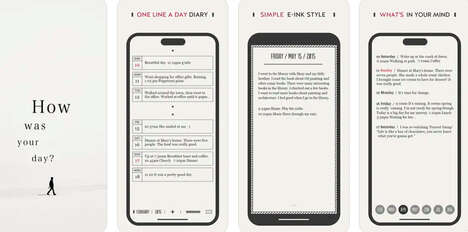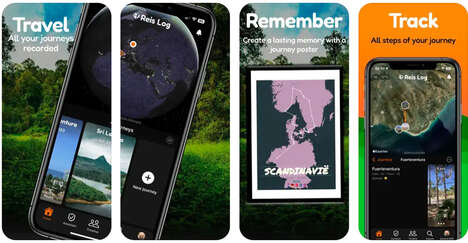
'Fabric' is a journalling app of a different kind. Rather than having its users input blocks of text, which can be time-consuming when it comes to recording major events from one's day, the app keeps tabs on a user's whereabouts in order to capture the places that they visit.
The app describes itself as a "personal location-based journal" and makes use of an iPhone's features like the accelerometer and step counter in order to decipher a user's movements. At the end of a day, a Fabric user is left with a dynamic map of all the places they've traveled, so that it's easy to see restaurants, parks and other physical spaces that can be cross-referenced with publicly listed places via Foursquare.
What's Driving This Trend
- Geographical Journaling Apps
- 'Fabric' helps users log location-based adventures by automatically tracking their whereabouts and creating a dynamic map of the places they visit.
- Personalized Travel Recommendations
- By cross-referencing a user's visited locations with publicly listed places, apps like 'Fabric' can provide personalized recommendations for restaurants, parks, and other physical spaces.
- Smartphone Sensor Integration
- Apps like 'Fabric' leverage smartphone features like the accelerometer and step counter to track user movements and automatically capture their location data.
Who This Affects Most
- Travel and Tourism
- Geographical journaling apps have the potential to revolutionize the way people plan and experience travel, offering personalized recommendations and a unique perspective on visited locations.
- Technology and Mobile Apps
- The integration of smartphone sensors and advanced mapping technologies in apps like 'Fabric' opens up opportunities for innovative location-based services and experiences.
- Data Analytics and Personalization
- The data collected by geographical journaling apps can be analyzed to generate valuable insights about user preferences and behavior, enabling targeted recommendations and personalized experiences.