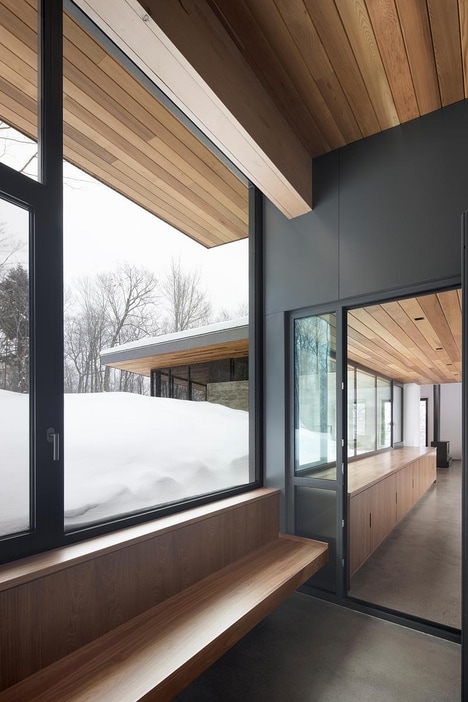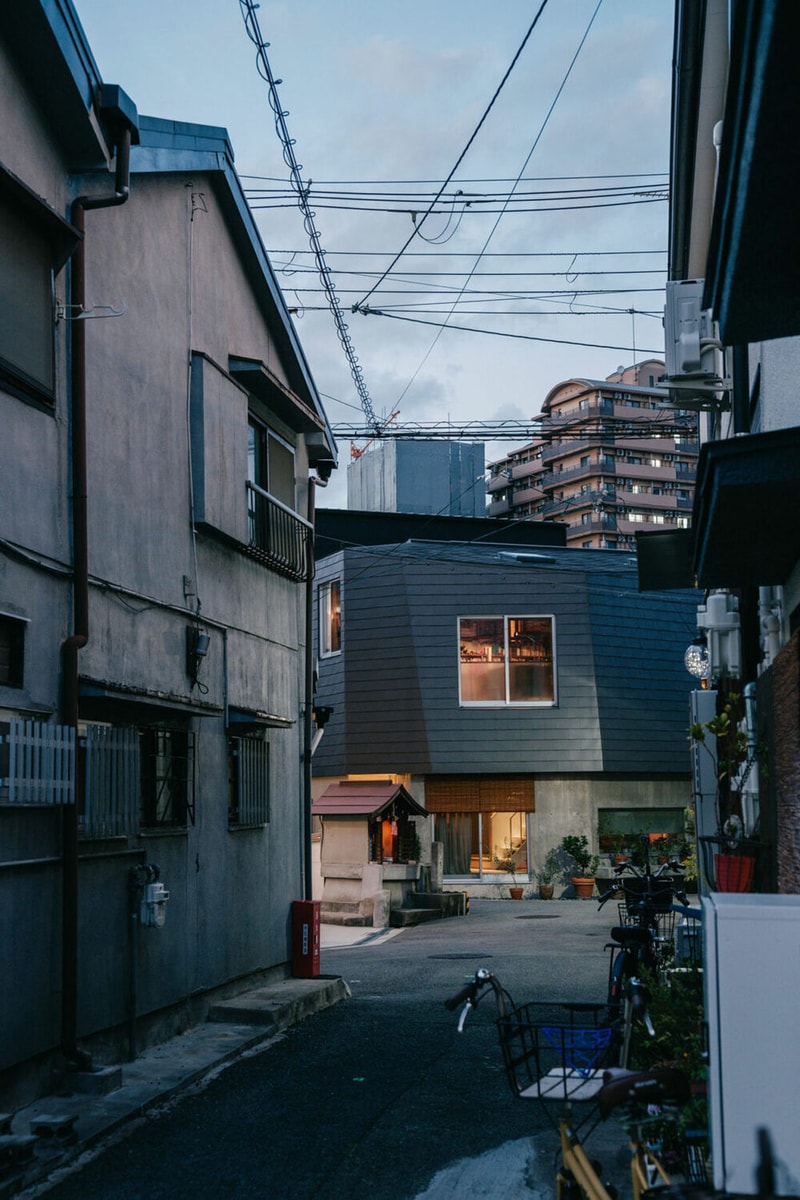
The Jonoya by Masakazu Tsujibayashi is a compact residence in Osaka designed to balance exposure to the street with a deeply internalized living environment. Set within a dense urban fabric, the home presents a restrained exterior while building a layered interior defined by wood surfaces, skylights, and shifting spatial relationships. The design centers on creating a private “inner world,” using light and material to separate daily life from the surrounding city while still acknowledging its presence.
Masakazu Tsujibayashi’s layout unfolds through split levels, varied ceiling heights, and a central staircase that acts as both circulation and spatial anchor. Skylights draw daylight into the core of the home, while built-in elements such as shelving and seating define zones without enclosing them. Materials including timber, concrete, and plaster are used to create contrast and continuity.
Image Credit: Masakazu Tsujibayashi
Why This Trend Is Growing
- Layered Spatial Design
- The use of split levels and shifting ceiling heights creates new possibilities for rethinking circulation as a core spatial strategy that reconfigures small-footprint dwellings.
- Inner-city Privacy Architecture
- A restrained exterior paired with an inward-focused ‘private world’ model signals demand for buildings that mediate urban exposure through controlled thresholds and buffered interiors.
- Light-driven Compact Living
- Strategic skylights and focused daylighting in dense settings point toward compact homes that prioritize perceived spaciousness and wellbeing via engineered natural light.
Industries Being Reshaped
- Residential Architecture
- Design practices are challenged to deliver high privacy and spatial richness within minimal footprints by integrating layered plans and multifunctional built-ins.
- Urban Real Estate Development
- Developers operating in dense cities are encountering value shifts toward properties that trade external presence for curated internal environments and experiential light quality.
- Interior Materials Manufacturing
- Manufacturers of timber, plaster, and concrete systems may be pushed to innovate modular, tactile components that enable continuous material language across compact, layered interiors.