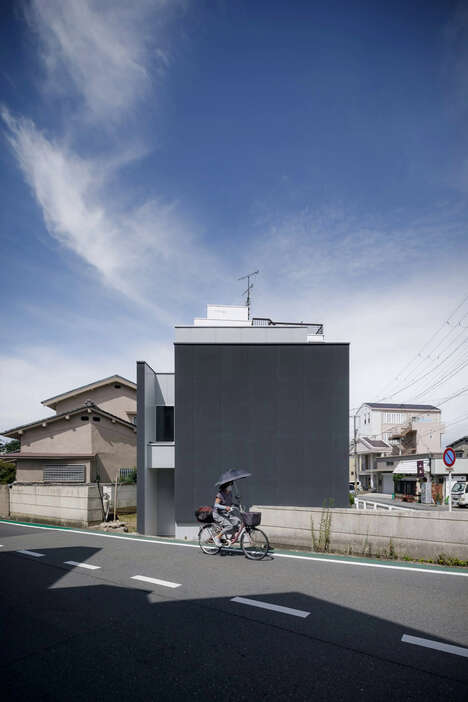
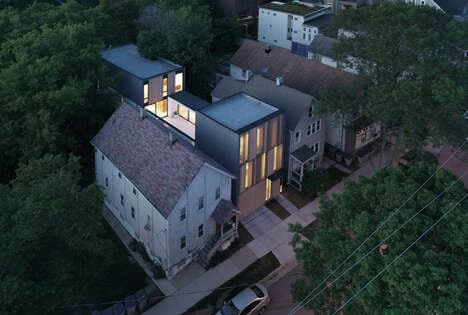
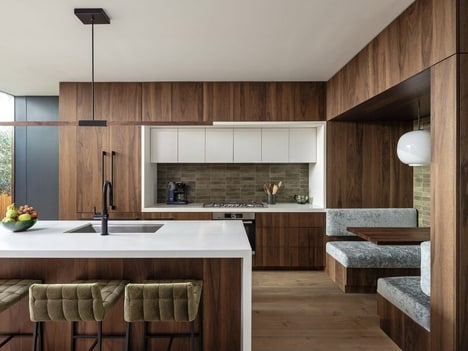
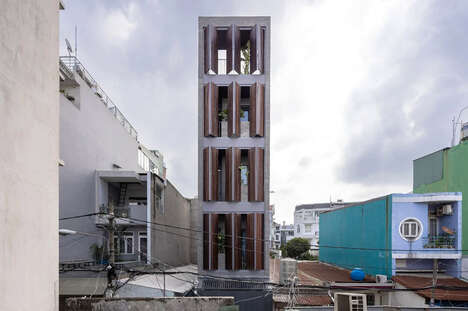
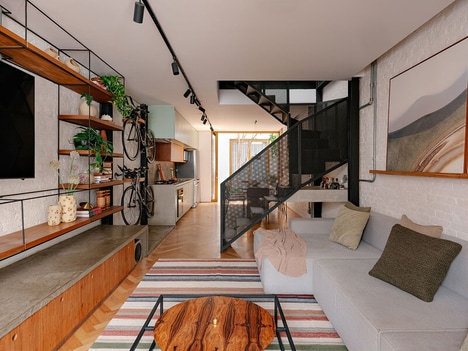
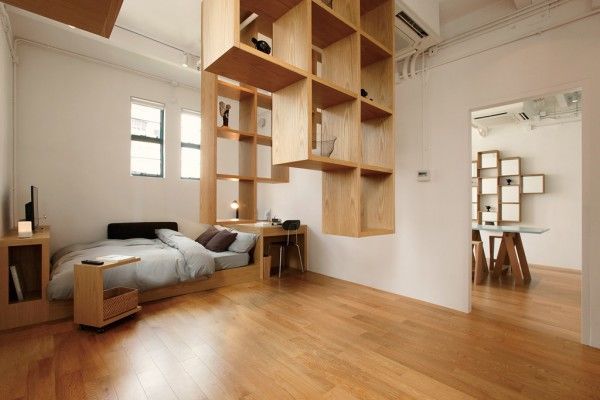
The architects of this inner city home made the most of the little space they were provided in a cramped city to create a home featuring modern and minimalistic design.
Seoul-based architecture studio 'AIN Group' created the 'Guro-dong Mini House' as a testament to efficient design, despite having drastic spatial constrictions. The house sits in one of the most densely populated areas in the city -- using a lot that was only three meters wide and 13 meters long.
The inner city home is shared by three people -- each requiring their own personal space. With individual limitations, the architects provided a spatially efficient home that optimizes the small space for natural lighting while still maintaining privacy for its residents. Using a "skip-floor" structure and the main staircase as a natural divider, each resident was given their own living space.
What's Driving This Trend
- Efficient Design
- Architects are creating spatially slender homes to optimize small spaces for natural lighting and privacy.
- Skip-floor Structure
- Skip-floor structures are being used in inner city homes to maximize living space while maintaining privacy for residents.
- Minimalistic Design
- Minimalistic designs are being used to create modern inner city homes that are still comfortable and functional.
Who This Affects Most
- Architecture
- Architects are incorporating efficient design and minimalistic styles to maximise living space in inner-city areas.
- Real Estate
- Real estate developers can invest in creating functional and optimised inner-city homes to meet the demand of urban living.
- Construction
- Construction companies can use skip-floor structure to build narrow and tall inner city homes, assisting governments in tackling urban overcrowding.