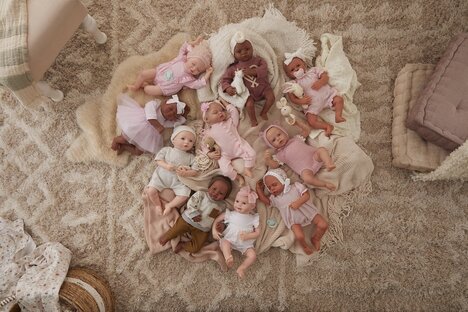

Chellams is creating soft, cotton-knit dolls designed for children aged one and up, with a focus on cuddly materials and more varied representation. Instead of the hard plastic construction found in many traditional dolls, the characters are made with natural fabrics, giving them a softer feel for younger children to hold and play with.
The dolls use organic cotton and kapok fibre, a plant-based material, for their soft, plush texture. The debut collection also includes a range of skin and hair tones, with different hairstyles inspired by both traditionally masculine and feminine looks. This gives children more options to choose a character that feels familiar to them.
Rather than building the dolls around lots of accessories or additional features, Chellams keeps the focus on the character itself. The combination of soft materials and varied appearances gives the collection a more tactile, simple approach to early childhood play.
Image Credit: Good Housekeeping, Chellams
Why This Trend Is Growing
- Inclusive Soft Toys
- Broader skin tones, hair textures, and gender-neutral styling create space for toy brands to serve families seeking identity-affirming play experiences.
- Natural Play Materials
- Organic cotton, kapok fibre, and other plant-based textiles are reshaping expectations for safer, softer, and more sustainable products for young children.
- Minimalist Character Design
- A shift away from accessory-heavy toys toward tactile, character-focused dolls highlights demand for simpler play objects that support imagination and emotional connection.
Industries Being Reshaped
- Toy Industry
- Representation-led plush dolls present new product differentiation for brands competing in early childhood categories traditionally dominated by plastic figures.
- Baby Products
- Soft, natural-fiber play items align with parent preferences for gentle, developmentally appropriate goods designed for infants and toddlers.
- Sustainable Textiles
- The use of organic and plant-based fibers in children’s products expands commercial relevance for eco-conscious material suppliers beyond apparel and home goods.