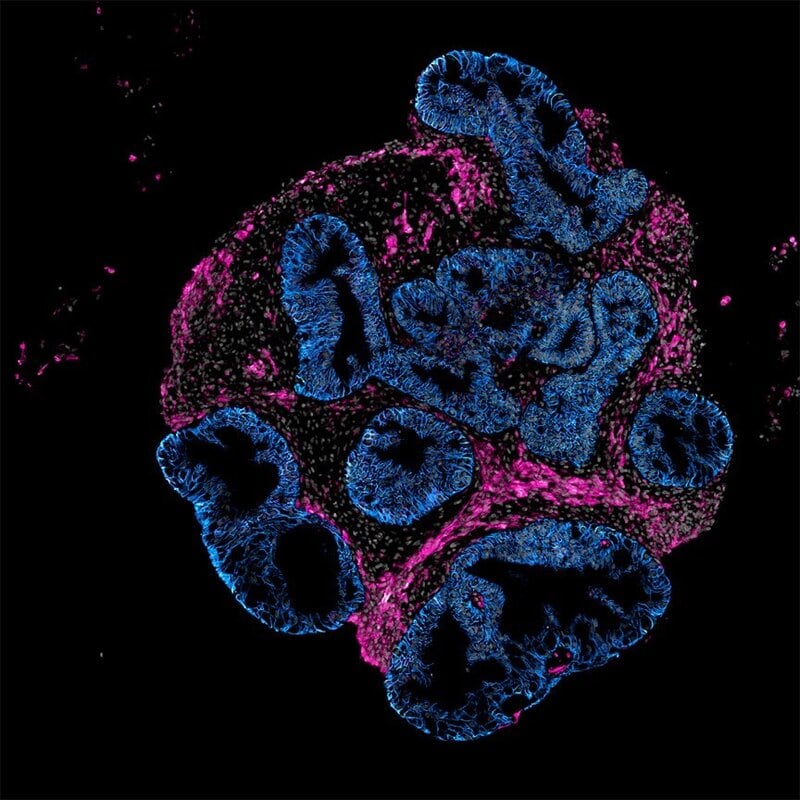
Intero Biosystems is selling 'GastroScreen,' a human intestinal organoid model designed to test how drugs and other compounds affect the gut before they reach people. Unlike simpler gut models, it includes multiple cell and tissue types from the human intestine, giving drugmakers a more human-relevant testing option.
The Denver startup ships the organoids in tubes, with roughly 100 units at a time. Each organoid is about one millimeter across. Customers can use them in a healthy state or push them into disease-like states to study compound responses, broadening their use across safety and disease research.
At about one millimeter across, GastroScreen gives companies a lab model that is closer to human biology than animal testing or flat cell layers. As regulators move toward non-animal methods, that kind of organoid makes screening more practical and can shorten the distance between early tests and human data.
Image Credit: Intero Biosystems
Why This Trend Is Growing
- Human-relevant Preclinical Models
- More biologically accurate organoids are reshaping early drug screening by reducing reliance on animal studies and improving the predictive value of lab-based safety data.
- Ready-to-ship Organoid Platforms
- Standardized organoids delivered in scalable formats create openings for outsourced testing workflows, faster assay setup, and broader access to advanced human tissue models.
- Disease-state Screening Systems
- Configurable gut models that mimic healthy or diseased conditions expand compound testing into more specific safety, efficacy, and mechanism-of-action research.
Industries Being Reshaped
- Pharmaceutical Research
- Drug developers gain more human-relevant intestinal testing systems that can support faster candidate filtering before costly clinical trials.
- Biotechnology Tools
- Suppliers of lab platforms are finding growth potential in standardized organoid products that combine biological complexity with commercial scalability.
- Regulatory Science
- Evolving acceptance of non-animal testing methods is creating demand for validated human tissue models that align preclinical evidence with policy shifts.