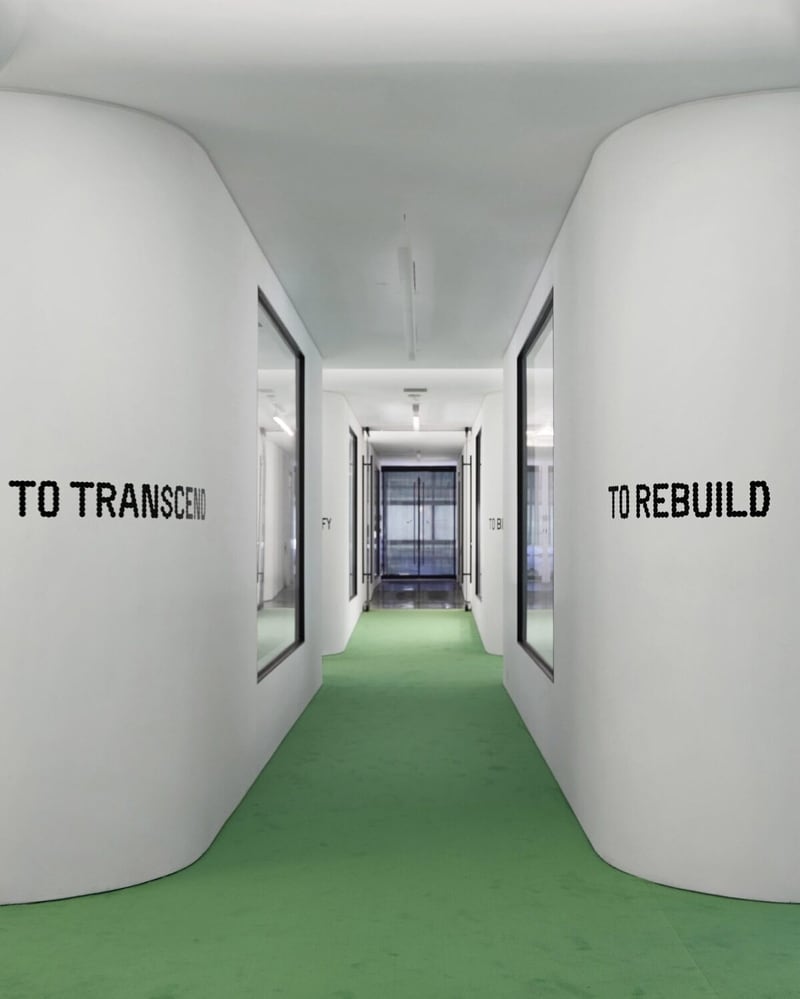
Home of Football transforms a gallery beneath New York’s High Line into a World Cup exhibition space showcasing historic football memorabilia and cultural artifacts. Designed by Crosby Studios and curated by Air Afrique, the pop-up presents items from the Manzano Heritage Collection, including jerseys, trophies, photography, and archival objects connected to some of football’s most influential players. Bright green carpeting, brushed-metal display cases, and oversized illuminated circles reinterpret the visual language of a football pitch within the gallery setting.
The exhibition is organized into six sections that explore themes of movement, belonging, aspiration, resistance, and reinvention. Large screens, football-shaped seating, and retail displays are integrated throughout the space, while the vivid green palette references a digitally reimagined playing field. Located within a High Line 9 gallery in Chelsea, the venue will remain open throughout the 2026 FIFA World Cup and host additional cultural programming.
Image Credit: Pauline Shapiro
What Makes This Trend Stand Out
- Sports Heritage Pop-ups
- Temporary exhibitions centered on archival memorabilia are turning fan nostalgia into immersive cultural destinations with new revenue potential around major global tournaments.
- Digitized Pitch Environments
- Gallery spaces that reinterpret stadium aesthetics through lighting, screens, and spatial design signal opportunities for hybrid physical-digital storytelling in sports culture.
- Archive-led Retail
- Curated memorabilia displays paired with merchandise create a more editorial form of commerce where cultural context increases perceived value and fan engagement.
Sectors Adopting This
- Sports Entertainment
- Football organizations and rights holders are expanding beyond match-day experiences into cultural programming that deepens fandom through history, identity, and place-based storytelling.
- Museums and Galleries
- Contemporary exhibition venues are incorporating popular sports archives to attract broader audiences and redefine collectible culture as a mainstream curatorial category.
- Experiential Retail
- Retail environments linked to exhibitions are gaining relevance as branded spaces blend commerce, memory, and immersive design into destination-based consumer experiences.