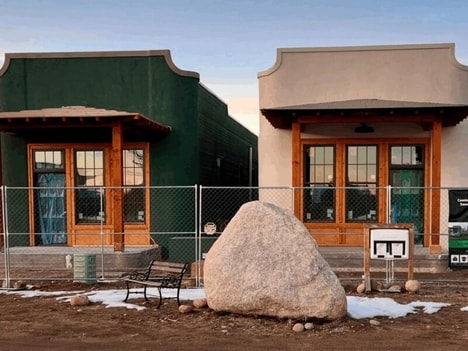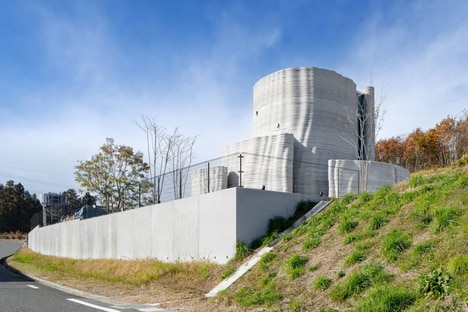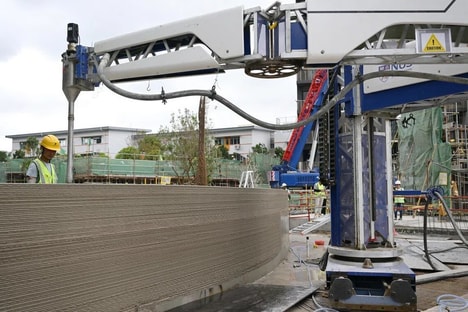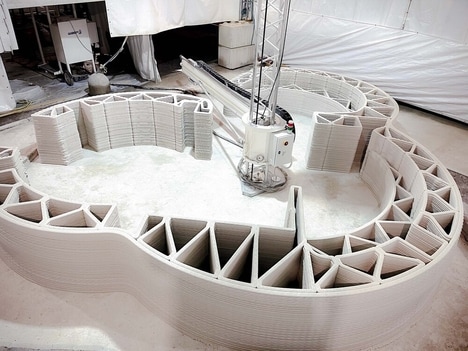
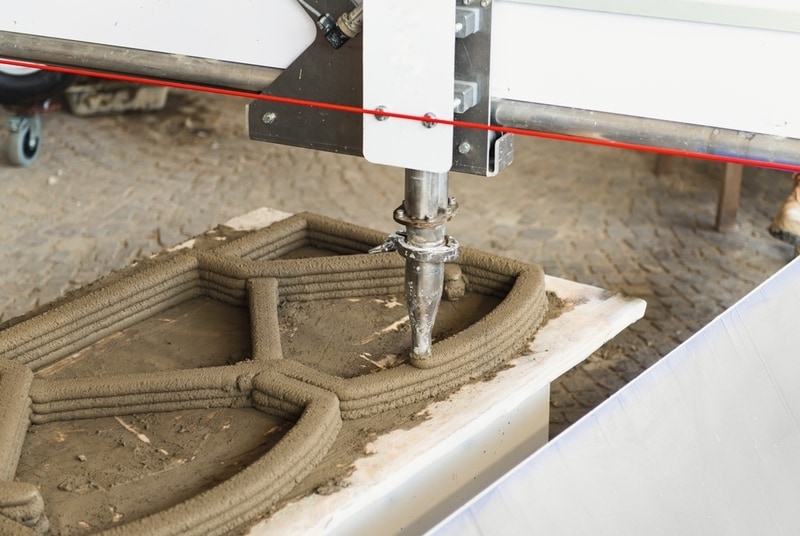
Holcim and COBOD completed ViliaSprint², a three-storey, 12-unit social housing building in Bezannes, France, using on-site robotic concrete printing featuring Holcim’s TectorPrint mix. Plurial Novilia developed the 800-square-meter project, which used a COBOD gantry to deposit layered, fully load-bearing walls, with three operators managing the process via tablets.
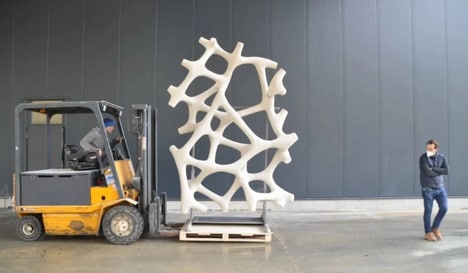
Holcim’s Innovation Center in Lyon formulated the concrete mix with synthetic macro-fibers to replace traditional reinforcement, achieving a 30% CO₂ reduction versus equivalent standard concrete and meeting France’s RE2020 2025 threshold. HOBO Architecture specified rounded forms that cut concrete use by about 10%, and wall printing finished in three months—twice as fast as a comparable conventional build on the same site.
For residents and builders, the project demonstrates faster delivery, lower embodied carbon and reduced on-site labor intensity, moving construction toward advanced manufacturing on site. Holcim and COBOD plan larger developments next, signaling a path for 3D printing to scale in social housing and sustainable construction.
Image Credit: Shutterstock/Fabio Pagani
What Makes This Trend Stand Out
- On-site Robotic Concrete Printing
- Demonstrates three-storey, unitized builds with gantry robots completing load-bearing walls twice as fast as comparable conventional methods.
- Fiber-reinforced Printable Mixes
- Achieves reinforcement replacement with synthetic macro-fibers and a 30% CO₂ reduction versus equivalent standard concrete while meeting stricter energy regulations.
- Form Optimization for Material Efficiency
- Rounded form designs reduce concrete volume by roughly 10%, indicating geometry-driven savings in material use and waste.
Sectors Adopting This
- Social Housing
- Exhibits potential for faster delivery and lower embodied carbon in affordable housing projects through modular, printed wall systems.
- Commercial Construction
- Shows a pathway to scale multi-unit developments with reduced on-site labor intensity and shorter schedules using robotic printing.
- Construction Materials and Admixtures
- Highlights demand for printable mixes and fiber additives tailored to replace steel reinforcement while meeting regulatory thresholds.