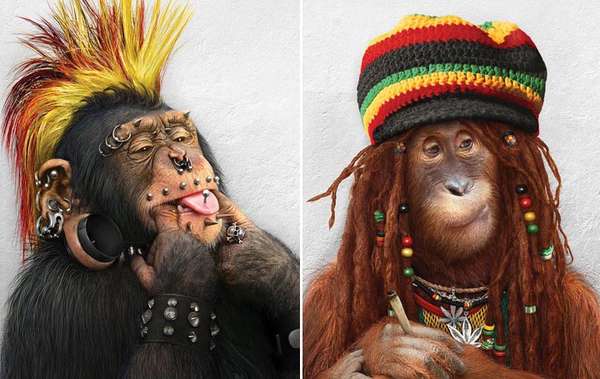
King Kong is only one of the thousands of primates used for entertainment, as shown by the series titled Suo Sarumawashi by photographer Hiroshi Watanabe. First of all, monkeys generally appeal to humans because of their similarity to people, which explains why these animals have been part of a militaristic Japanese practice known as Sarumawashi
This ancient tradition roughly consists of dressing up monkeys in samurai costumes. Watanabe's series is a representation and celebration of this art. In these images, macaque monkeys appear wearing all sort of Japanese pieces while posing in a very people-like manner for the camera. The result is hilarious and entertaining, making evident why this practice is over a thousand years old.
Funny and adorable, the series by Hiroshi Watanabe makes audiences fall in love with primates.
Why This Trend Is Growing
- Primate Entertainment
- The tradition of dressing up monkeys for entertainment purposes creates an opportunity to explore innovative ways to engage audiences with primates.
- Cultural Celebrations
- The Japanese practice of Sarumawashi opens up opportunities to create immersive experiences that celebrate ancient traditions and customs.
- Anthropomorphic Photography
- Photographers can explore the trend of capturing images that humanize animals, creating a unique and entertaining visual experience.
Industries Being Reshaped
- Entertainment
- The entertainment industry can explore incorporating monkey performances and cultural celebrations to engage audiences in a fresh and exciting way.
- Travel and Tourism
- Organizations in the travel and tourism industry can create cultural experiences that showcase and preserve traditional practices like Sarumawashi.
- Art and Photography
- Artists and photographers can explore the trend of anthropomorphic photography, creating captivating visuals that blur the line between humans and animals.