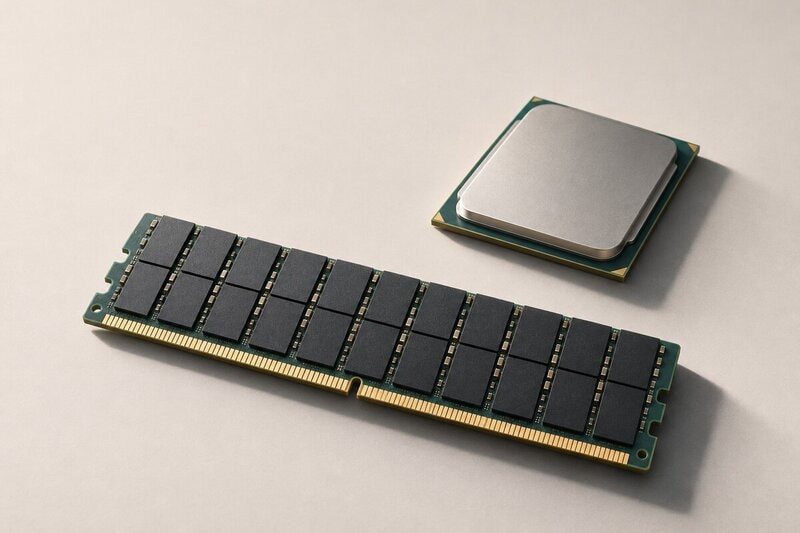
The next generation of server memory is set to take up less space while handling more data. JEDEC's upcoming DDR6 standard is designed to shrink memory modules to 74 mm and increase starting transfer speeds to 12.8 GT/s, giving data centres more room to run demanding workloads, including AI.
DDR6 is also expected to support higher-capacity memory chips than today's DDR5, with formats including RDIMM and CAMM giving manufacturers more flexibility when designing servers. Improvements to power efficiency should help systems handle larger amounts of data without using energy as quickly as performance increases.
The standard is still in development, with the first DDR6 systems expected around 2028 or 2029. If it arrives on schedule, the smaller modules could help data centres fit more memory close to processors, making room for increasingly demanding computing tasks.
Image Credit: AI-generated
What Makes This Trend Stand Out
- Compact Server Memory
- Shrinking module footprints create space for denser server architectures that support heavier AI and analytics workloads without expanding physical infrastructure.
- Energy-efficient Data Processing
- Improved power performance in next-generation memory introduces potential for data centres to scale compute capacity while moderating energy demand.
- Processor-proximate Computing
- Higher-capacity modules positioned closer to processors enable faster data access patterns that could reshape high-performance computing system design.
Sectors Adopting This
- Data Centres
- Facilities built around dense memory configurations gain new pathways to increase workload throughput within existing rack and floor-space constraints.
- Semiconductors
- Memory chipmakers and module designers face opportunities to differentiate through compact form factors, higher capacities, and advanced DDR6-compatible architectures.
- Artificial Intelligence
- AI infrastructure benefits from faster, more capacious memory systems that can support larger models and more demanding training or inference tasks.