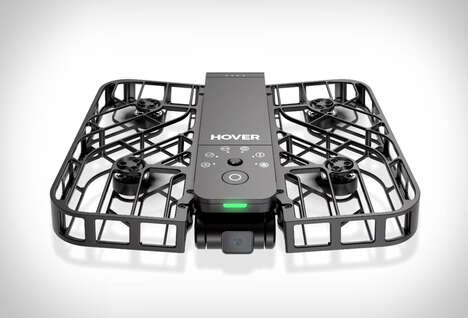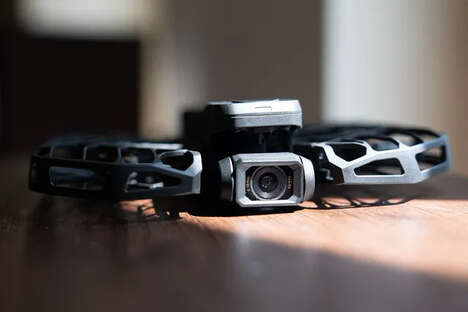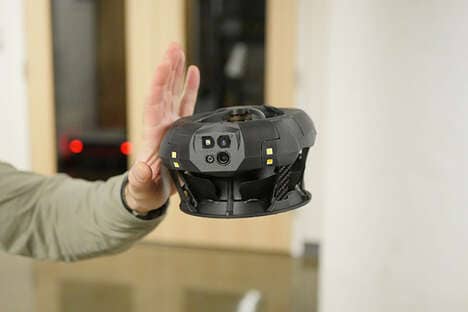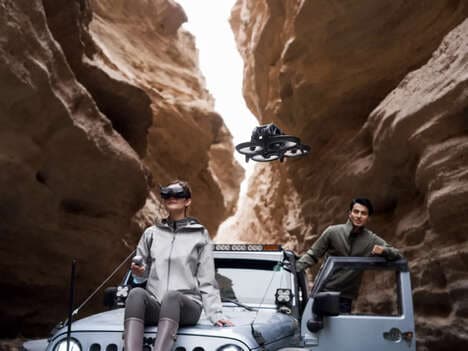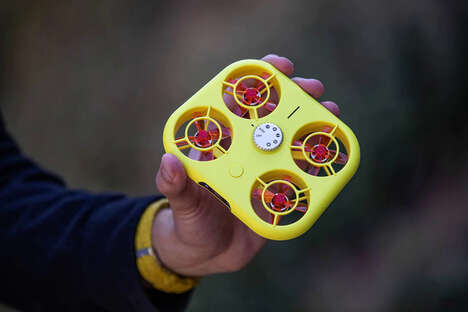
Drone technology is expanding at an increasingly rapid rate, which is transitioning the technology from being just for leisure flights to trick-oriented, which is evident with the SKEYE Hexa Drone that's designed especially for performing aerial stunts. Small enough to be held in one hand but powerful enough for performing a number of complex aerial maneuvers, the SKEYE Hexa Drone is designed with six propeller blades that allow for maximum control and added movement when in-flight.
Charging in just 30-minutes and providing around eight minutes of flying timing, the SKEYE Hexa Drone features LED lights to easily see it in the dark. When in-flight, the SKEYE Hexa Drone can be operated from about 164-feet from the included remote.
Why This Trend Is Growing
- Trick-focused Drones
- The increasing demand for drones to perform tricks and aerial stunts is creating opportunities for companies to design specialized drones with features that maximize control and complex maneuverability.
- Compact Aerial Gadgets
- As drones become smaller and more powerful, there is a growing trend for compact aerial gadgets that can be held with one hand and provide extended flying times for maximum enjoyment.
- Led-equipped Drones
- Adding LED lights to drones expands their usability, and creates opportunities for companies to design drones for flying in the dark, for specific displays or events, and for night-time surveillance.
Industries Being Reshaped
- Consumer Electronics
- As drones become increasingly popular as a leisure product, there is an opportunity for companies to corner the leisure drone market by investing in specialized drones that meet the needs of thrill-seekers and hobbyists.
- Entertainment
- There is a growing trend of using drones in live performances and shows for special effects, and there is potential for companies to innovate and create specialized drones and add-on features for maximum performance and display.
- Security and Surveillance
- Adding features such as LED lights to drones expands their capabilities and creates new opportunities for surveillance during low-light hours, and for maximizing visibility and range during search and rescue operations.