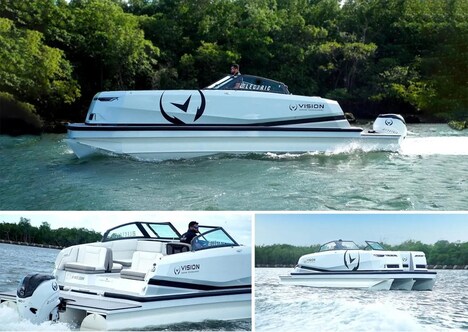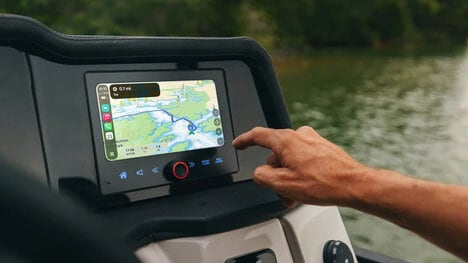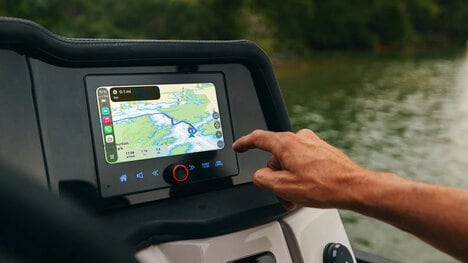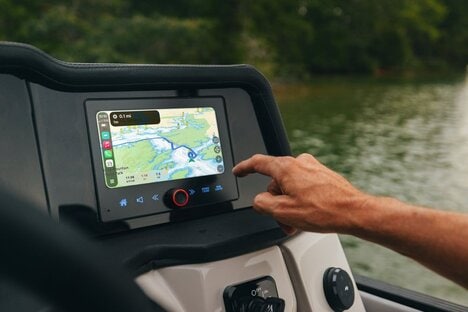
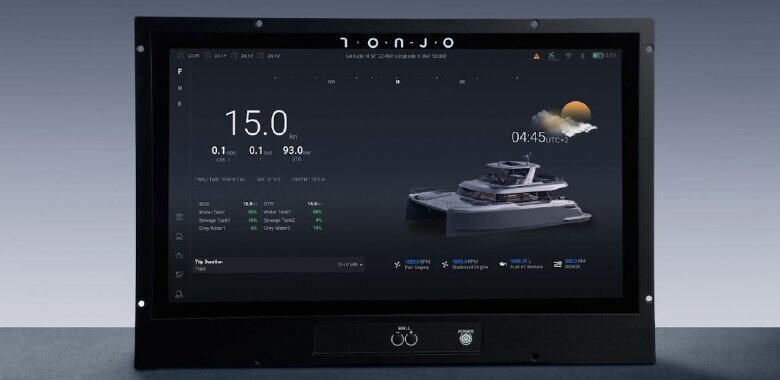
Shanghai marine technology company TONJO is bringing its Intelligent Helm System to the U.S., combining key boat controls and information within a single helm setup. Built for use with dock-based operations, the system supports voice commands directly on the vessel, allowing it to remain functional even when offshore connectivity is limited.
The platform brings navigation information and engine data into one shared dashboard instead of spreading them across separate displays. TONJO has also designed the software to work across different types of boats, with updates allowing the system to develop after installation.
The approach reflects a broader shift towards more connected and automated marine technology. By combining onboard controls, voice interaction and software that can be updated over time, TONJO is positioning the helm as a more adaptable part of the vessel rather than a collection of separate systems.
Image Credit: TONJO
What Makes This Trend Stand Out
- Integrated Marine Dashboards
- Unified helm interfaces create openings for software-led vessel management that reduces fragmented controls and centralizes operational decision-making.
- Offline Voice Control
- Onboard voice functionality introduces new possibilities for hands-free marine operation in environments where network connectivity is inconsistent or unavailable.
- Upgradeable Boat Software
- Post-installation software updates support longer product lifecycles and enable boats to gain new capabilities without major hardware replacement.
Sectors Adopting This
- Marine Technology
- Connected helm platforms are reshaping boating systems through integrated navigation, diagnostics and control experiences.
- Recreational Boating
- Consumer vessels benefit from simplified interfaces that make advanced onboard data more accessible to non-professional operators.
- Navigation Systems
- Cross-vessel software compatibility signals a shift toward adaptable marine navigation tools that evolve beyond fixed display hardware.