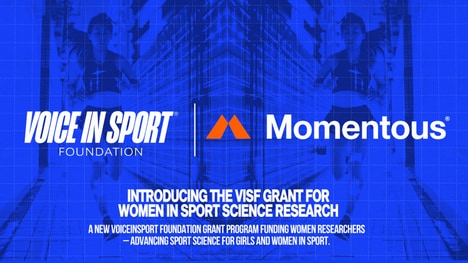
Momentous has committed $200,000 USD to fund the Collective X Health Research Grant Program. This initiative involves a partnership with the women's health research platform co-founded by exercise physiologist Dr. Stacy Sims.
The Collective X Health Research Grant Program distributes funding across multiple female-focused research projects. Applications for this opportunity are expected to open in June 2026. The mentorship and peer review will be led by Dr. Sims and Collective X Health research leads.
Momentous’ donation is part of the company’s broader Change the Ratio campaign, which began as a pledge to narrow the gender gap in health and performance science. This is important because the current reality of sports science is stark — only six percent of studies focus exclusively on female physiology, and under nine percent of National Institutes of Health funding goes to women's health research.
Image Credit: Momentous
Why This Trend Is Growing
- Targeted Women’s Health Funding
- Increasing pools of designated funding for female-specific studies could reshape research priorities and create richer, sex-specific datasets.
- Mentorship-led Research Grants
- Grant programs guided by experienced female scientists and peer review structures may accelerate translational studies and elevate underrepresented investigators.
- Corporate Equity Campaigns in Science
- Growing corporate commitments to narrow gender gaps in research funding have the potential to redirect institutional grantmaking and influence publication pipelines.
Industries Being Reshaped
- Sports Science and Physiology
- Focused investment in female physiology presents opportunities for novel training protocols, recovery technologies, and sex-specific performance biomarkers.
- Biotech and Clinical Research
- Expanded funding toward women’s health research could unlock targeted therapeutics and diagnostics that address historically under-studied conditions.
- Health Tech and Data Platforms
- Enhanced datasets from female-focused studies may enable specialized analytics, personalized health apps, and new wearable sensors calibrated to female physiology.