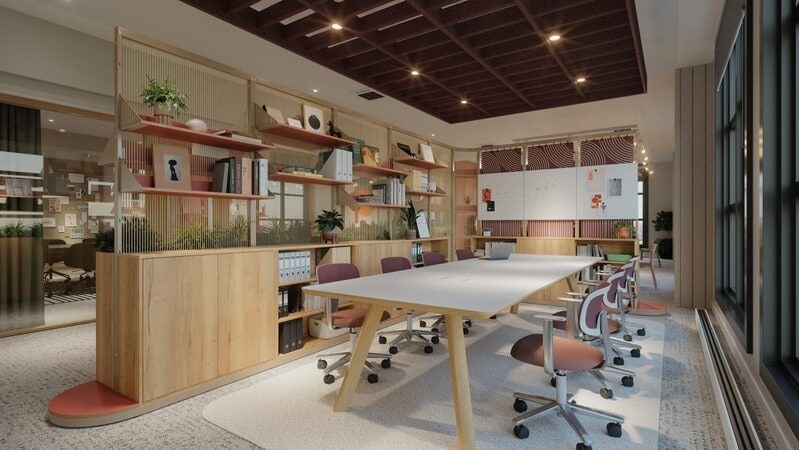
The Harp System from Connection rethinks modular space division through bungee-cord panels held within slim steel frames. Panels define zones while allowing light and sightlines to pass, creating a sense of privacy without isolation. The open construction softens sound through textile tension and spacing, supporting calmer conversations in shared environments. Optional elements such as planters, shelving, whiteboards, and media units introduce function and texture without adding bulk. The overall impression is measured and orderly, with proportions that read clean rather than decorative.
The system adapts as layouts evolve, with modules that link in straight runs, corners, and cross formats to shape multiple neighborhoods. Curved sections and a broad palette enable subtle wayfinding or bold graphic statements, depending on the brief. Configurations suit offices, lounges, and public interiors where permeability and calm are equally important. By defining space without building walls, the design balances openness, acoustic comfort, and long-term flexibility.
Image Credit: Connection
What Makes This Trend Stand Out
- Flexible Space Designs
- Innovative modular systems such as the Harp System promote adaptive environments that meet changing spatial needs without permanent alterations.
- Acoustic Comfort Solutions
- Rethinking open-space acoustics with flexible partitions improves sound management, enhancing communication and productivity across shared environments.
- Multi-functional Interiors
- Incorporating elements like planters and media units into partitions enables a blend of aesthetics and utility, redefining interior functionality.
Sectors Adopting This
- Office Furniture
- Modular acoustic systems offer a transformative approach to workspace arrangement, aligning with trends toward more adaptable and comfortable office environments.
- Interior Architecture
- The integration of dynamic partition solutions signifies a shift towards designs that prioritize flexibility and sensory experiences in building interiors.
- Commercial Design
- Facilities prioritizing permeability and acoustic comfort leverage modular techniques to create inviting and adaptable commercial spaces.