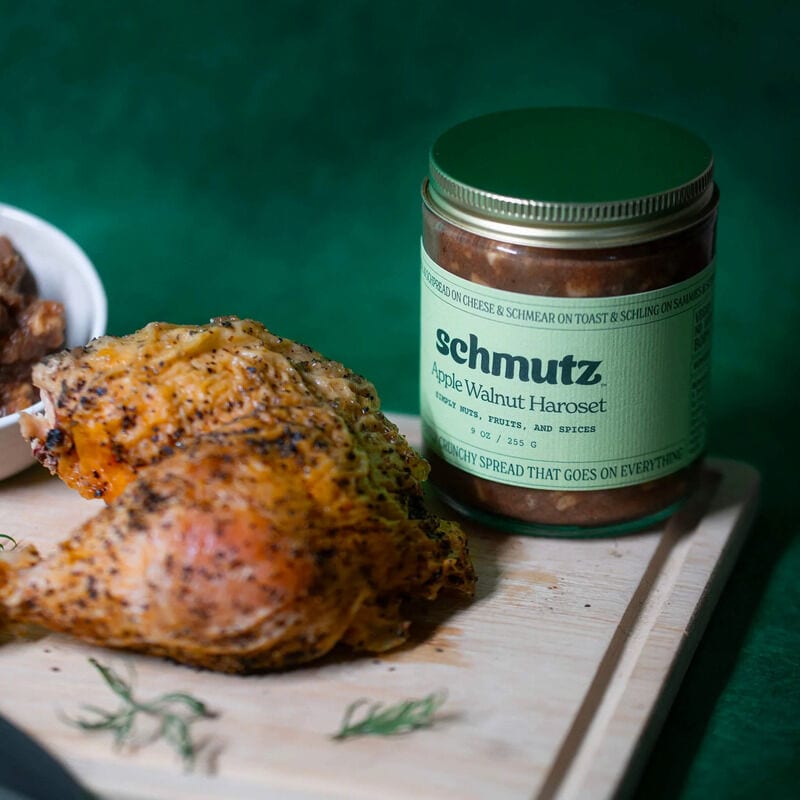
Schmutz transforms haroset—the sweet, textured paste made from fruits, nuts, and spices traditionally served during the Passover Seder—into a condiment that's ready to be savored every day.
This crunchy spread is ready to enjoy in flavors like Apple Walnut Haroset, which Schmutz describes as "apple pie in a jar." The reinvented gluten-free and certified Kosher condiment features apple puree as the first ingredient, followed by a few other simple additions like walnuts, dates, apples, lemon juice, vanilla, spices, and salt.
As part of its Everyday Haroset Sampler Pack, Schmutz pairs Apple Walnut with a sold-out Fig Hazelnut flavor. Both of these varieties can be enjoyed in a myriad of ways, whether they're scooped straight from the jar, swirled into oatmeal, or spread over toast.
Key Themes Behind This Trend
- Cultural Fusion Cuisine
- The transformation of traditional cultural foods like haroset into everyday condiments represents a shift towards integrating culturally significant flavors into mainstream diets.
- Texture-driven Foods
- The popularity of crunchy-sweet condiments highlights consumer interest in foods that provide enhanced sensory experiences through varied textures.
- Mindful Ingredient Sourcing
- Incorporating natural, gluten-free, and simple ingredients addresses growing consumer demand for healthier and more transparent food labels.
Where This Applies
- Ethnic Food Products
- This industry sees a growing opportunity as cultural foods adapt into everyday staples, tapping into global culinary interests.
- Specialty Condiments
- A focus on unique flavor profiles and ingredient combinations drives innovation in the specialty condiment market.
- Gluten-free Foods
- The increasing desire for inclusive dietary options fuels the expansion of gluten-free products, appealing to health-conscious and dietary-restricted consumers.